
NVIDIA XR AI is now available in public beta, giving developers a library for building spatially aware multimodal AI agents for AR glasses.
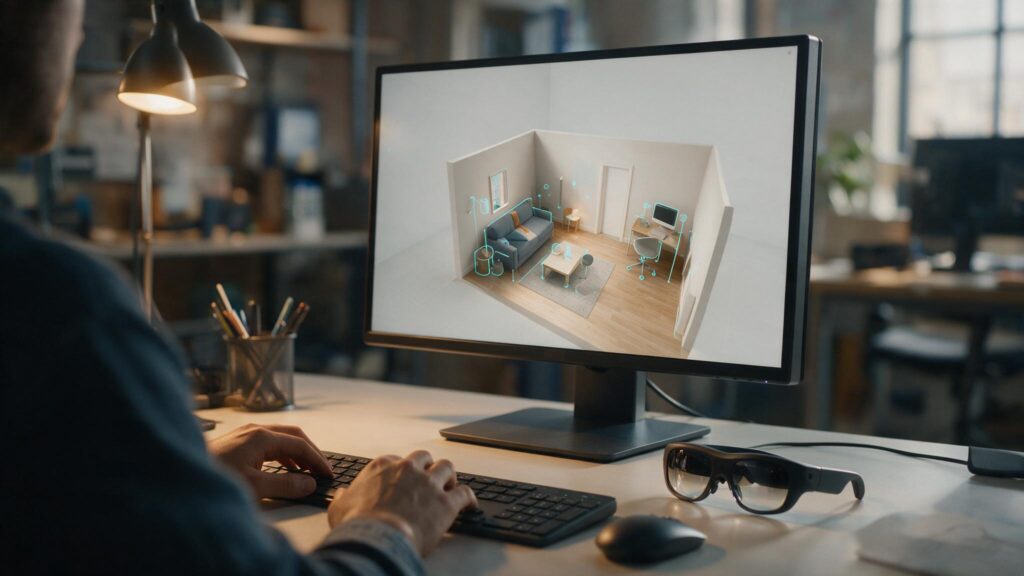
Most AI assistants integrated into current smart glasses and AR devices process what a user asks or shows them without genuine understanding of the physical space around that interaction, but NVIDIA’s new XR AI public beta is specifically built to give developers tools for creating AI agents that are spatially aware, meaning they understand and reason about physical space rather than treating every query as if it existed in a vacuum. This blog breaks down what spatial awareness actually adds to an AI agent’s capability, and why this developer toolkit matters for the next generation of AR glasses applications. It opens by explaining the specific limitation this toolkit addresses, that current AI assistants on AR glasses typically respond to voice queries or camera images as isolated inputs, without genuinely understanding where the user is standing, what’s physically around them beyond the immediate camera frame, or how objects and spaces relate to each other, a meaningful gap between what feels like genuine spatial understanding and what current systems actually deliver. The piece walks through what multimodal specifically adds alongside spatial awareness, combining visual, audio, and spatial positioning inputs together rather than processing each in isolation, letting an AI agent build a genuinely richer, more contextually accurate understanding of a user’s actual situation before generating a response. It covers why NVIDIA specifically offering this as a developer library matters for the broader AR glasses ecosystem, since providing reusable, well-engineered spatial AI building blocks lowers the technical barrier for individual businesses and smaller development teams to build genuinely spatially intelligent AR applications, rather than each developer needing to solve the underlying spatial reasoning problem independently from scratch. A section will address what genuinely spatially aware AI agents could enable for enterprise AR applications specifically, including field service assistants that understand not just what a technician is looking at but the broader physical layout of the equipment room they’re standing in, or training applications that can reason about a trainee’s position and movement through a physical training space rather than just their immediate point of focus. The blog also touches on why this kind of foundational AI infrastructure investment from a major platform provider like NVIDIA matters as a signal, reinforcing that spatial awareness is emerging as a genuinely important next capability tier for AR-integrated AI, beyond the more basic visual recognition and voice interaction most current AI glasses features are still built around. Spatially aware AI agents, multimodal AR intelligence, and next-generation smart glasses capability are the throughlines here, breaking down a developer toolkit launch into genuinely useful context for where AI-powered AR functionality is heading next.