
Gracia AI announced $1.7 million in funding for its end-to-end 4D Gaussian Splatting platform, including cloud processing, a studio toolkit, and Unity and Unreal plugins.
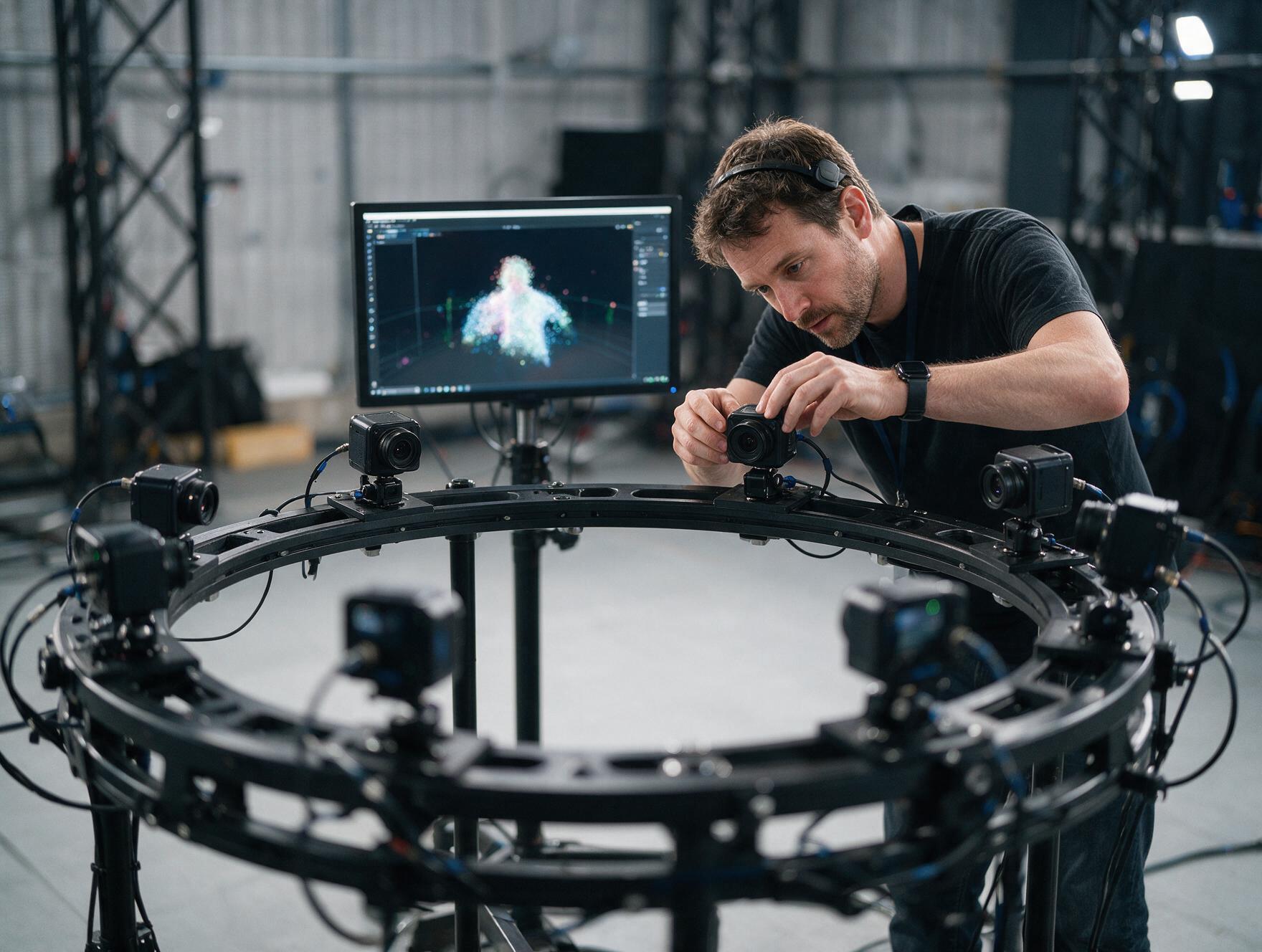
Standard Gaussian Splatting captures a photorealistic, static snapshot of a real-world scene, but Gracia AI’s new funding specifically targets 4D Gaussian Splatting, adding a genuinely different dimension, time, to that already impressive capture technology, and this blog breaks down what capturing motion and change over time in this format actually enables compared to the static captures that have generated so much recent excitement. It opens by explaining what the fourth dimension specifically adds to standard Gaussian Splat capture, that while standard, or 3D, Gaussian Splatting captures a single frozen moment in photorealistic detail, 4D Gaussian Splatting captures that same photorealistic fidelity across a sequence of moments, essentially producing a genuinely volumetric video rather than a static volumetric photograph, letting a captured scene include real motion, a person walking, machinery operating, a process unfolding, rather than a single frozen instant. The piece walks through why this distinction matters so significantly for the kinds of content businesses actually want to capture, since many of the most valuable real-world scenes and moments inherently involve motion and change, a manufacturing process, a training demonstration, a live event, content that a static capture technology, however photorealistic, simply cannot represent regardless of how good the underlying fidelity is. It covers what the specific tools included in this funded platform, cloud processing, a studio toolkit, and native Unity and Unreal plugins, suggest about Gracia AI’s go-to-market approach, indicating a genuine focus on making this technically demanding capture format accessible to working studios and developers through familiar production tools rather than requiring specialized, standalone software most content teams would need to learn from scratch.
A section will address what practical applications 4D Gaussian Splatting specifically unlocks for immersive content production, including capturing training demonstrations with full photorealistic fidelity and genuine motion, documenting live events or performances volumetrically rather than through flat video, and creating genuinely realistic digital twins of dynamic industrial processes rather than static facility snapshots. The blog also touches on the realistic technical and cost considerations still involved in this emerging format, since volumetric video capture at this fidelity level remains considerably more resource-intensive than either standard video or static Gaussian Splat capture, meaning early adoption likely makes the most sense for genuinely high-value content where the added realism and motion capture justify the additional production investment. 4D Gaussian Splatting, volumetric video capture, and next-generation reality capture technology are the throughlines here, breaking down a funding announcement into genuinely useful context for understanding where photorealistic reality capture technology is heading next.