
Apple has added a power wheelchair control feature to Vision Pro, letting users operate a compatible chair using only their gaze, extending the headset’s existing eye-tracking hardware into physical assistive mobility. The feature is currently limited to the United States and works with exactly two drive-system partners at launch.
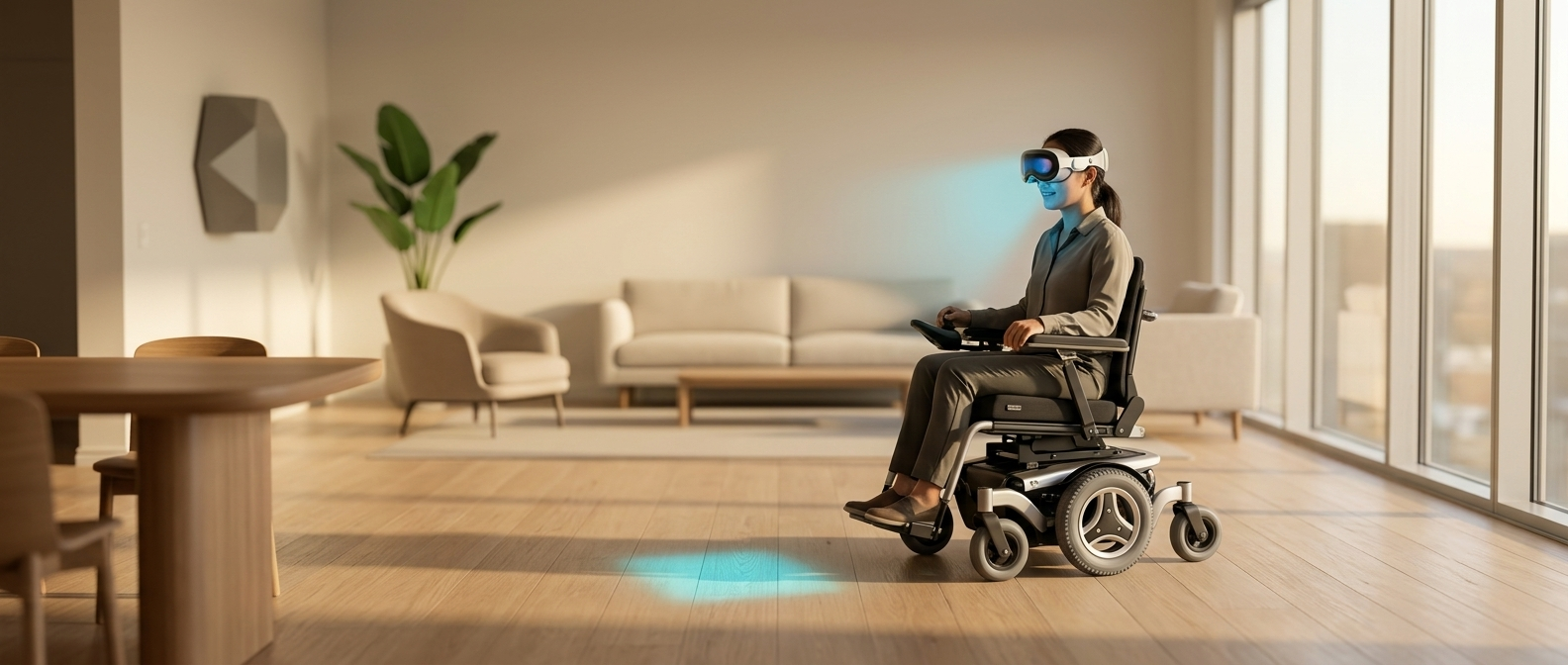
Apple just extended Vision Pro’s eye-tracking hardware, originally built for navigating menus and selecting content, into something with real physical-world stakes, letting users operate a power wheelchair using only their gaze. This blog treats that feature as a meaningful case study in accessible immersive technology design, using it to explore a part of the AR and VR conversation that gets far less attention than gaming, training, or marketing applications but arguably matters just as much for the industry’s long-term credibility. It explains the underlying technical achievement in plain terms, describing how eye-tracking hardware originally designed for interface navigation was repurposed for precise, safety-critical physical control, a significant leap in reliability and responsiveness requirements compared to selecting a menu item on a screen. The piece covers why this kind of feature matters beyond the specific use case, arguing that when a major immersive hardware platform builds serious assistive technology capability directly into its core product rather than treating it as an afterthought, it signals that accessibility is being treated as core design criteria rather than a compliance checkbox added late in development. It walks through what this means for how PointZero and other immersive experience builders should think about accessibility in their own AR, VR, and WebXR projects, covering practical considerations like designing interactions that do not assume full hand mobility, ensuring critical information is never conveyed through color or motion alone, and building experiences that remain usable through alternative input methods rather than assuming every user interacts the same way.
A section will address the current limitations of this specific feature honestly, including its restriction to the United States and compatibility with only two drive-system partners at launch, using that as an example of how even meaningful accessibility progress tends to start narrow before expanding, and why that pattern should not be mistaken for the technology being fully solved yet. The blog also touches on the broader business case for accessible immersive design, noting that experiences built with accessibility in mind from the start tend to reach measurably larger audiences and avoid costly retrofitting later, a practical argument alongside the ethical one. Accessible AR and VR design, assistive immersive technology, and inclusive spatial computing are the throughlines here, treating this Vision Pro feature as a prompt for the entire industry to take accessibility more seriously as a default rather than an add-on.