
After two years of insisting Vision Pro didn’t need controllers, Apple has published a detailed 74-page technical specification for building third-party motion controllers, down to the exact wavelength of the tracking LEDs, with visionOS 27 set to support third-party motion controllers for the first time.
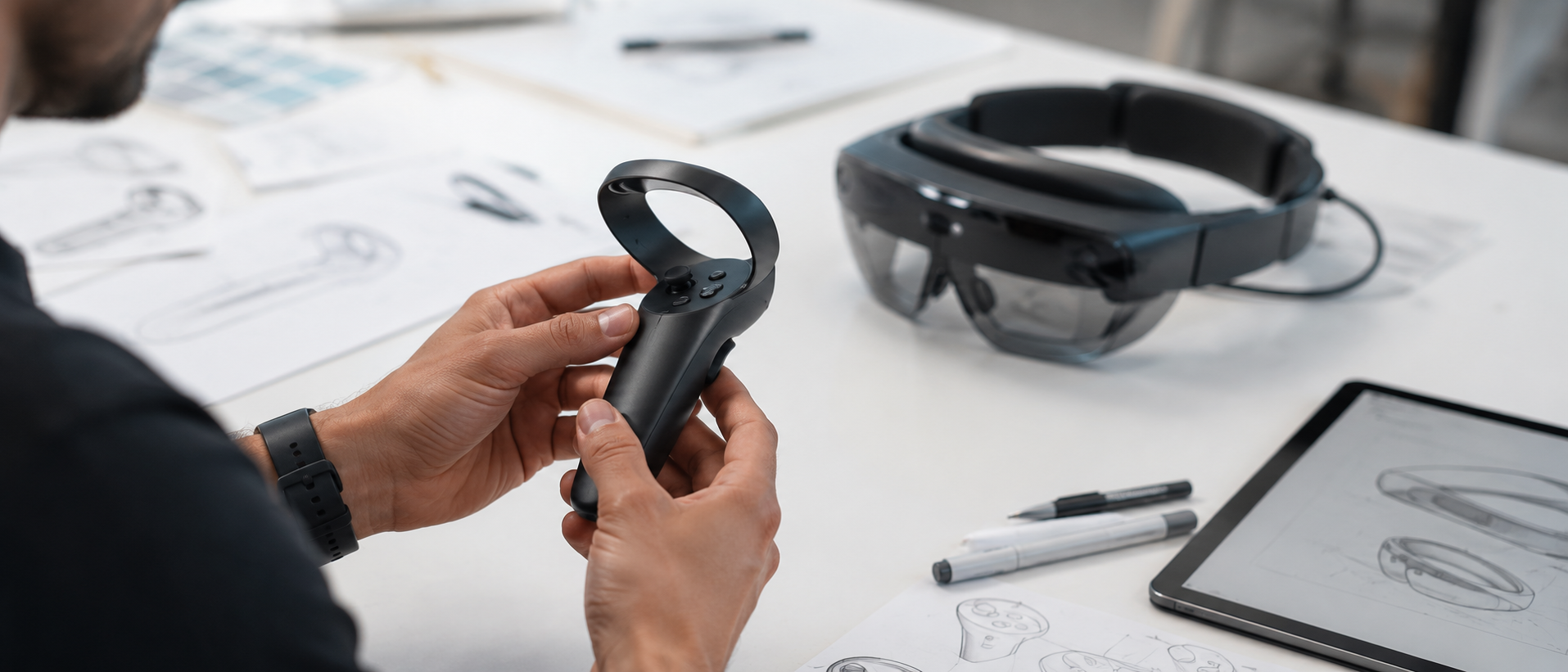
For two years, Apple’s position on Vision Pro was clear and consistent, that hand and eye tracking made physical controllers unnecessary for a genuinely spatial computing device. That position just quietly reversed, with Apple publishing an extremely detailed 74-page technical specification for third-party motion controller development, down to the exact wavelength of the tracking LEDs required. This blog treats that reversal as a meaningful signal about the limits of hands-only interaction, and unpacks what it means for anyone designing VR content, training simulations, or spatial experiences going forward. It opens by explaining why this shift matters more than a simple feature addition, since Apple’s original hands-only stance was a genuine design philosophy, not just a missing feature, making this level of technical investment in enabling third-party controllers a real acknowledgment that certain experience categories need more precise, tactile input than gaze and gesture tracking alone can reliably provide. The piece walks through the specific categories of experience where controller input tends to outperform hands-only interaction, including fast-paced training simulations requiring precise timing, any experience involving simulated tool use or fine motor tasks, and extended sessions where hand-tracking fatigue becomes a genuine usability problem. It covers what this means practically for businesses building VR training content on Vision Pro or similar platforms, suggesting that experiences requiring high-precision interaction, industrial equipment simulation, surgical rehearsal, or detailed assembly training, are likely to see meaningfully better usability once dedicated controller support matures across the ecosystem.
A section will address the broader industry pattern this reflects, that even the most confident design philosophies eventually meet real-world usability data, and that the most durable spatial computing content strategies build in enough flexibility to support multiple input methods rather than betting entirely on any single interaction paradigm remaining dominant. The blog also touches on the practical timeline businesses should expect, noting that detailed hardware specifications typically precede actual third-party controller products by many months, meaning this is a signal to plan around rather than an immediate capability to build for today. Vision Pro controller support, VR interaction design, and spatial computing input methods are the throughlines here, translating a dense technical announcement into a practical planning signal for immersive content teams.