

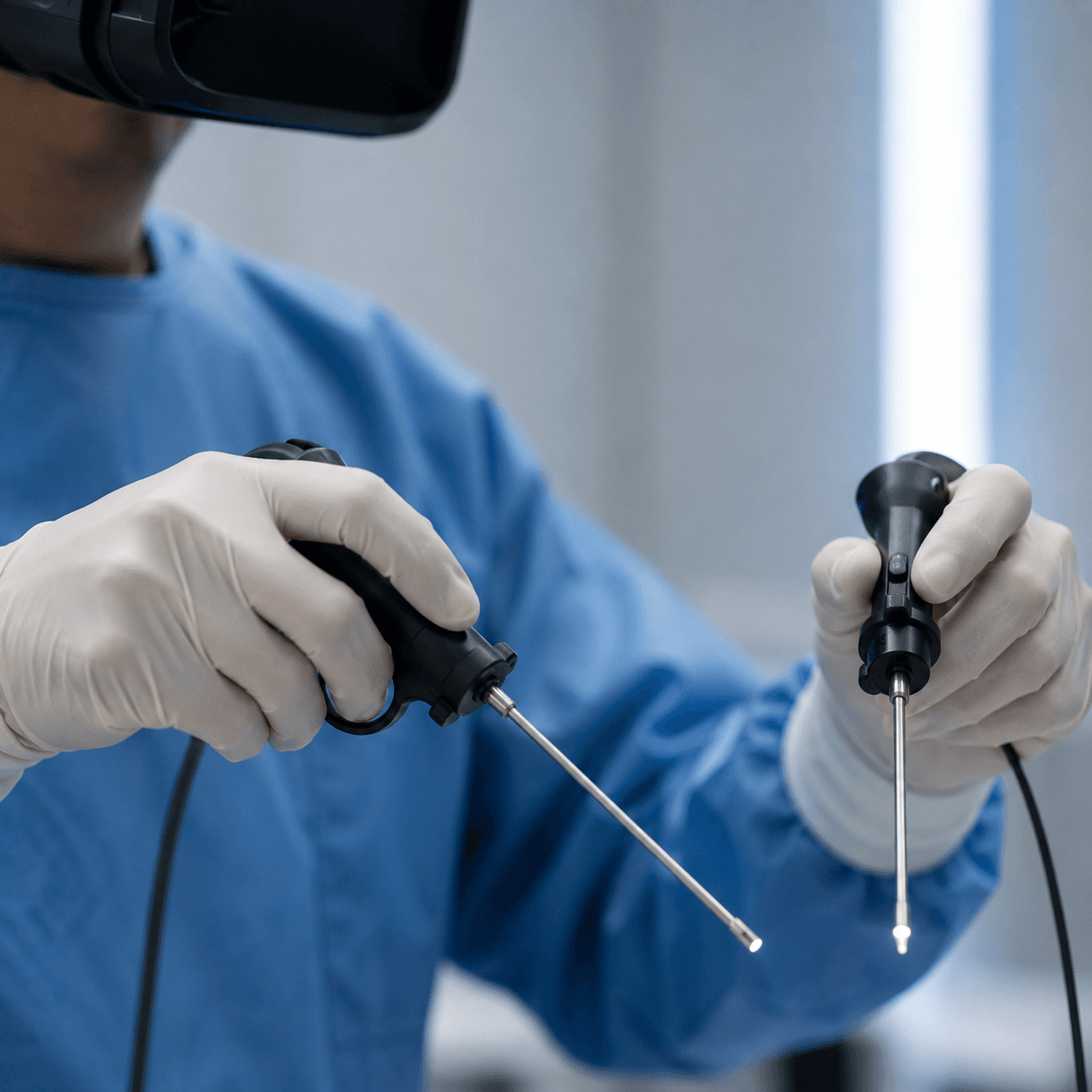
Osso VR expanded its virtual reality surgical training platform with AI-powered simulation modules in July 2026, part of a healthcare VR market projected to reach 45.79 billion dollars by 2033, with North America holding the largest regional share.
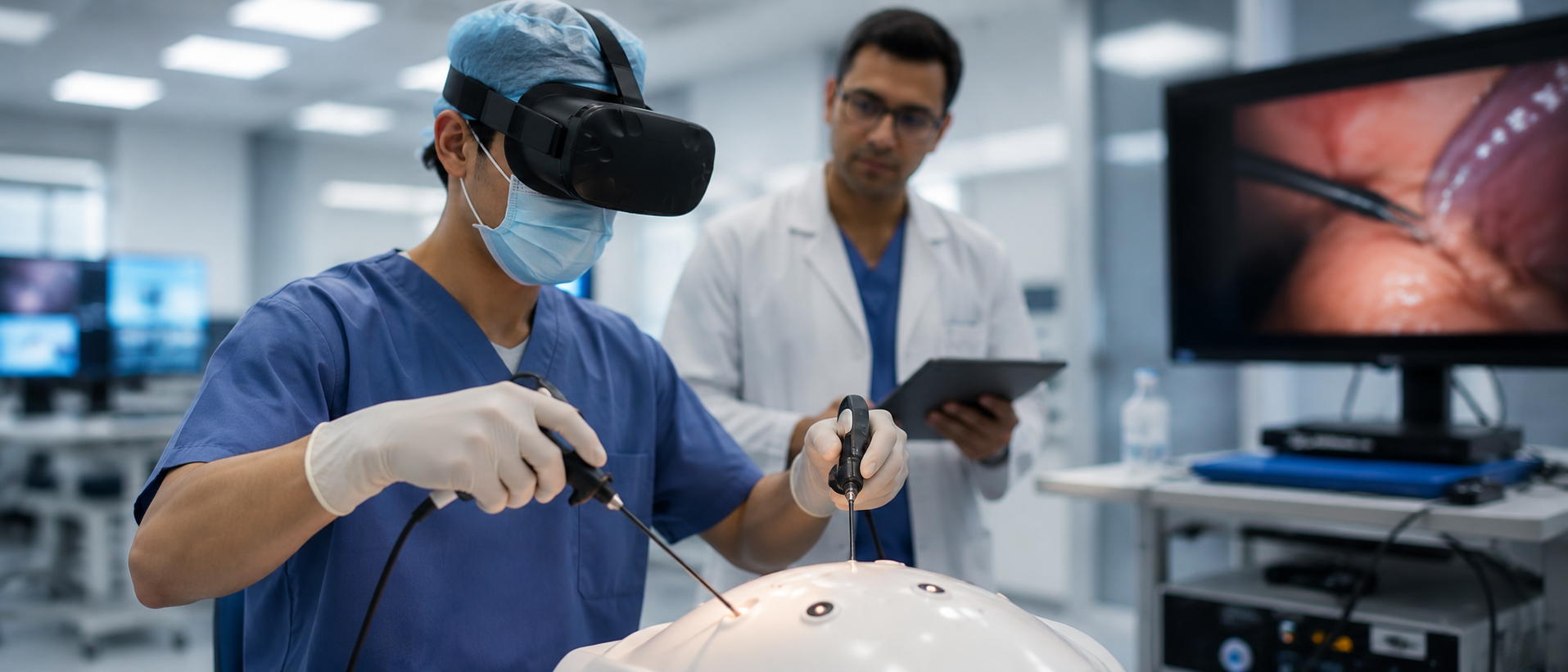
Surgical training just got a meaningful upgrade, with Osso VR expanding its established virtual reality training platform to include AI-powered simulation modules, and this blog explores why combining artificial intelligence with VR surgical rehearsal represents a genuine step forward rather than an incremental feature addition. It opens by explaining what VR surgical training has already proven over the past several years, letting surgeons and residents rehearse procedures repeatedly in a realistic, risk-free simulation before ever operating on a real patient, an approach with a strong and growing evidence base behind it. The piece covers what AI-powered simulation modules specifically add to that foundation, including the ability to generate adaptive scenarios that respond differently based on a trainee’s decisions in real time, rather than replaying the same fixed sequence of steps every time, and the capacity to provide instant, personalized feedback on technique that would otherwise require a supervising surgeon’s direct observation. It explains why this matters for surgical education at scale, since AI-driven adaptive scenarios mean a training program is no longer limited by how many variations a human content team can manually build, allowing far more procedural diversity and edge-case practice than static VR modules alone could offer.
A section will address the broader healthcare VR market context this expansion sits within, referencing the sector’s projected growth to nearly 46 billion dollars by 2033, and explaining that expansions like this one are a primary driver of that growth curve, as established platforms deepen their capability rather than new entrants simply expanding the category’s reach. The blog covers what this signals for hospitals and surgical training programs currently evaluating VR investment, arguing that AI-enhanced simulation raises the bar for what a modern surgical training platform should offer, and that programs still relying on fixed-scenario VR content or, more commonly, no simulation training at all, are falling further behind an accelerating standard. It also touches on the broader pattern of AI and immersive technology converging across healthcare, noting that this pairing, VR’s spatial realism combined with AI’s adaptive intelligence, is showing up increasingly across surgical rehearsal, diagnostic training, and patient communication tools, not just this single platform. AI-powered surgical simulation, VR surgical training, and adaptive medical education are the throughlines here, positioning this expansion as a preview of where clinical training technology is heading next.