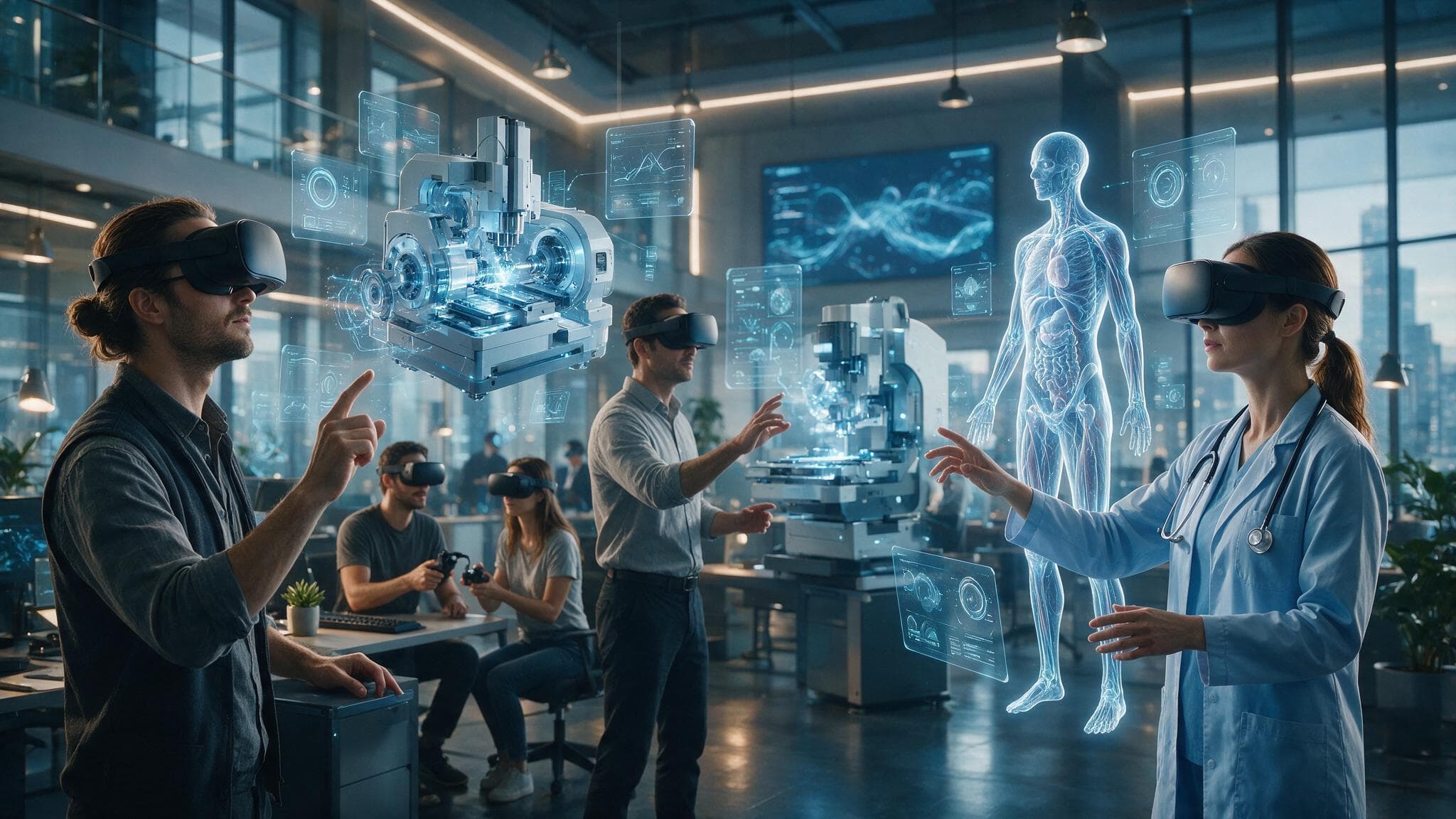


As of 2026, 75% of Fortune 500 companies use VR for training or education, with the practical question no longer whether to invest in immersive technology but which technology fits which problem and who can build it well.

Three out of every four Fortune 500 companies now use VR for employee training. That single number tells a bigger story than any general trend claim could: VR training has moved past the experimental phase and become standard operational practice at the highest level of business. For years, virtual reality training was treated as a futuristic add-on, something worth watching but not yet worth budgeting for. That assumption no longer holds. This blog unpacks why the world’s largest companies made this shift, and why the same pressures driving Fortune 500 adoption apply just as directly, and often more urgently, to mid-market manufacturing, oil and gas, and aviation businesses working with tighter margins for error and smaller training budgets.
Large enterprises adopted VR training to solve very specific, very expensive problems: safety liability on high-risk tasks, the cost of damaged equipment and wasted materials during physical training, and the need to onboard large numbers of employees quickly and consistently across multiple sites. None of those problems shrink just because a company is smaller. If anything, a single training-related accident or a slow onboarding cycle hits a mid-size company’s bottom line harder, not softer. The piece breaks down the most common objection businesses raise when VR training comes up, the assumption that it is financially out of reach outside enterprise-level budgets, and explains how training scope, headset requirements, and content complexity can all scale down to fit a smaller organization without losing the core safety and retention benefits that make VR training valuable in the first place. It covers how VR training outcomes get measured in practice, including completion rates, in-simulation error tracking, and time to full competency, giving safety and training managers hard numbers they can bring into a budget conversation instead of relying on a gut feeling. Virtual reality training for enterprise, VR safety training ROI, and immersive onboarding solutions are the throughlines here, framed not as abstract trends but as a competitive gap that widens every quarter a business delays adoption while its industry peers move ahead.