

Looking Glass has announced musubi, a new seven-inch holographic photo and video frame that lets consumers convert standard digital media into holograms, bringing dimensional display technology into a familiar, everyday consumer product format.
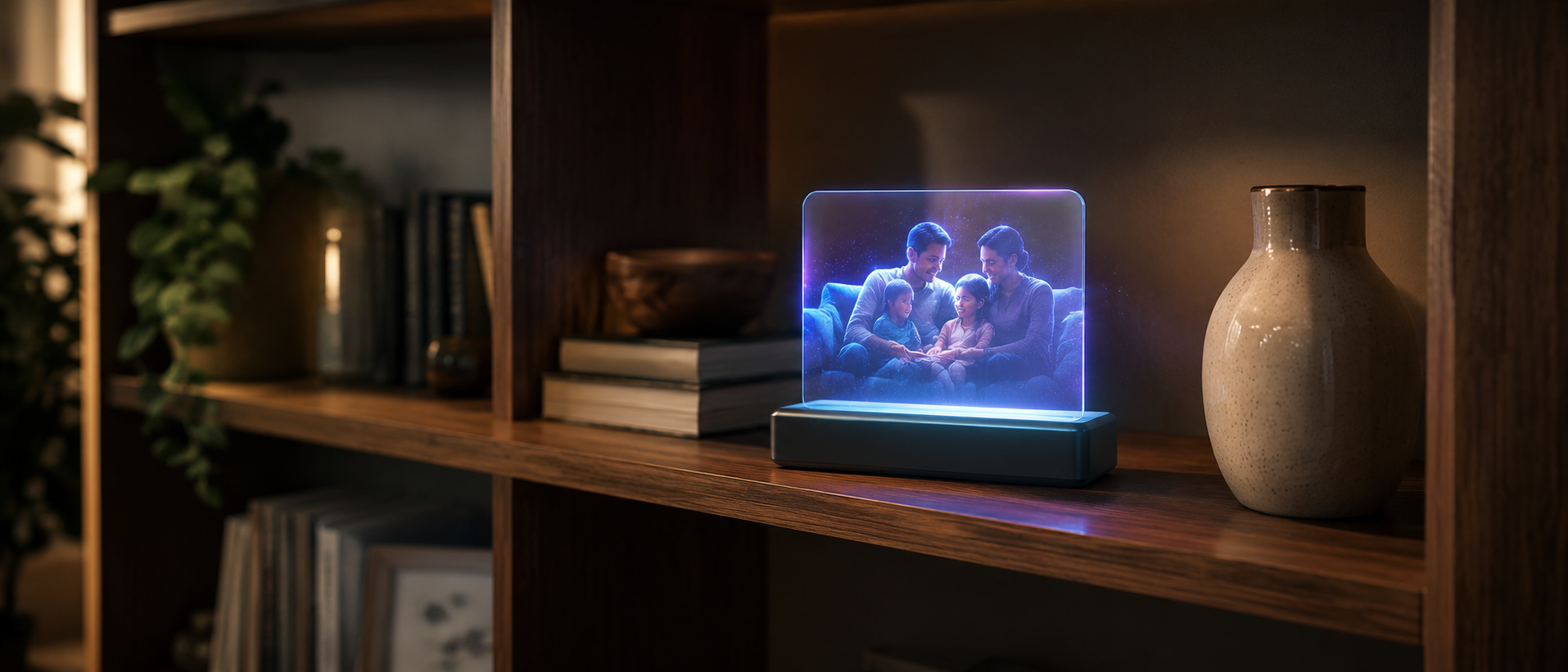
Holographic displays have historically lived in research labs, trade show demos, and expensive specialized hardware, but Looking Glass’s new musubi frame packages that same dimensional display technology into a genuinely familiar, everyday consumer object, a seven-inch photo frame, and this blog explores why that specific packaging choice matters for holographic technology’s path toward mainstream relevance. It opens by explaining the core technical claim behind this product, converting standard digital photos and videos into holographic, dimensional display content, meaning existing everyday media, family photos, product shots, short video clips, can be experienced with a genuine sense of depth and dimension rather than requiring specially captured or rendered 3D content from the outset. The piece walks through why choosing the photo frame format specifically represents a smart strategic move for holographic display adoption, since a photo frame is a category consumers already understand and have physical space for in their homes, unlike a dedicated VR headset or standalone display that requires learning an entirely new product category and use case from scratch. It covers what this kind of accessible, everyday holographic hardware could mean for brands and businesses thinking about physical retail or office display applications, including product showcases that let customers see genuine dimensional detail without a headset, or office reception displays that present company or product content with a sense of depth that a standard flat screen cannot match.
A section will address the realistic content question this raises for businesses, since the value of a holographic display ultimately depends on having genuinely well-produced dimensional content to show on it, meaning brands interested in this kind of hardware should think carefully about content strategy alongside any hardware investment, rather than assuming standard flat photography and video will look equally compelling once displayed holographically. The blog also touches on the broader pattern this product reflects, that immersive and dimensional display technology continues moving toward more accessible, familiar consumer formats rather than requiring dedicated headsets or specialized viewing conditions, a trend that mirrors the broader push across the AR and VR industry toward lowering the friction between curiosity and actual use. Holographic display technology, dimensional content formats, and accessible immersive hardware are the throughlines here, treating a consumer product launch as a meaningful signal of where dimensional display technology is heading for everyday use.