

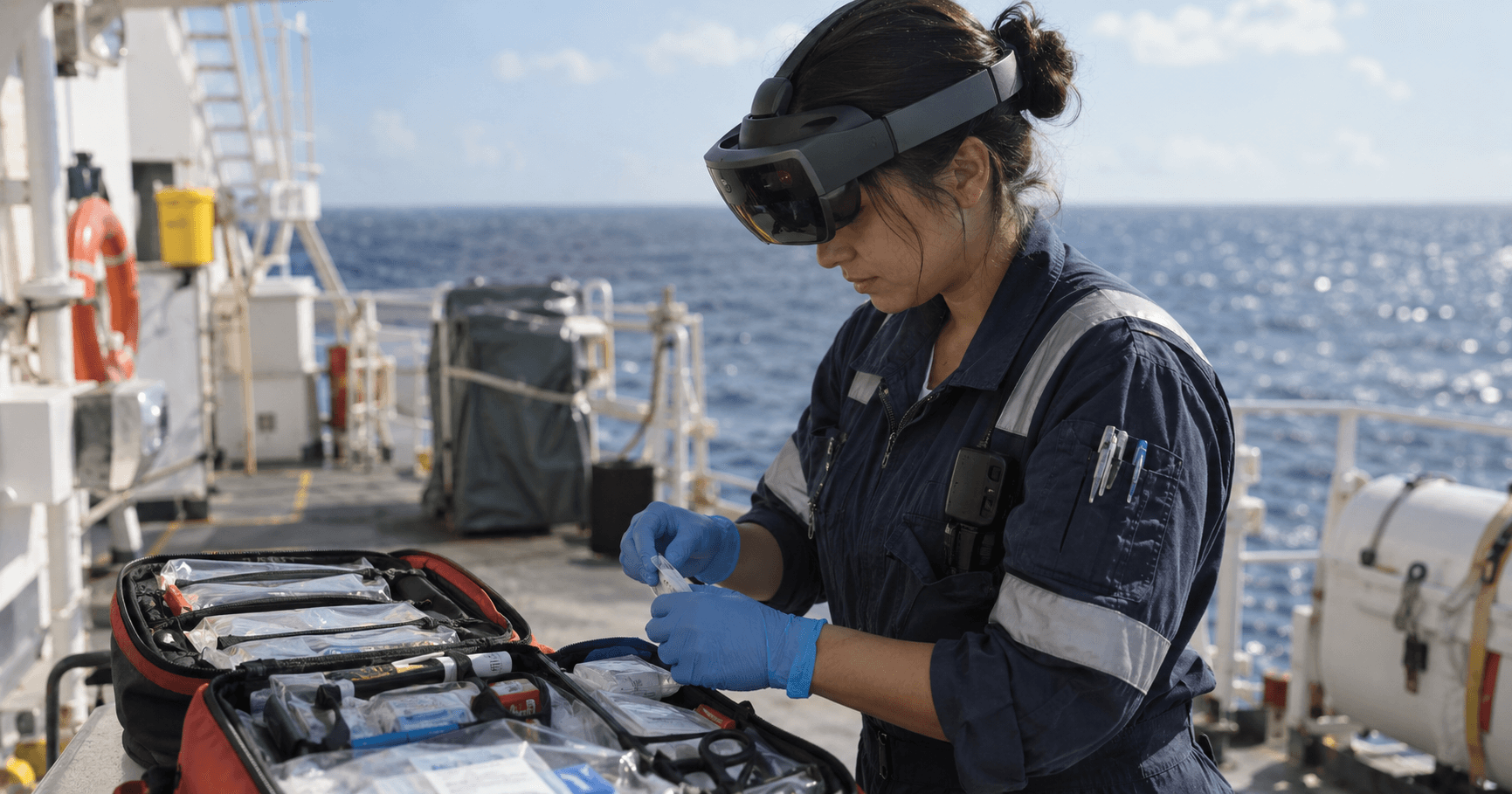
Veyond Metaverse was named a winner in the AR, VR, XR, and Metaverse category of Fast Company's 2026 Next Big Things in Tech list for OceanMD, a platform that lets physicians work side by side with local medical teams thousands of miles away, without leaving their own clinic or office, seeing what the on-site team sees, demonstrating techniques, and guiding procedures in real time while the on-site medic's hands stay free using an XR headset. The detail that separates this from most mixed-reality remote assistance platforms is the engineering constraint it was deliberately designed around: OceanMD is built to operate at just 100 kbps, a fraction of what nearly every other mixed-reality collaboration platform assumes is available, specifically so it can run over the slow satellite access available at sea rather than requiring the high-speed internet connection most remote-expert AR platforms simply take for granted. That constraint matters because it addresses a genuinely underserved population directly, more than 2 million people work as seafarers or on offshore rigs, environments where specialist medical help can be literally days away, and where a connectivity-light solution isn't a nice-to-have feature, it's the entire thing that determines whether the platform works at all.
For PointZero's own positioning on remote expert and telemedicine AR applications, this is a genuinely valuable reference point, not because every client needs a maritime-grade solution, but because it reframes a question worth asking on every remote-assistance project: what's the actual connectivity environment the end user will be in, and is the platform being designed around realistic field conditions or around the comfortable broadband connection of a demo environment. The same underlying lesson applies directly to oil and gas field sites, remote mining operations, and rural healthcare settings, environments PointZero already serves, where bandwidth constraints are the real design parameter, not an edge case to handle later. Worth citing this award directly in any pitch involving remote-site deployment, since it's concrete, independently recognized proof that genuinely low-bandwidth AR collaboration is not just technically possible, it's winning major industry recognition for solving exactly the problem that keeps remote and offshore operations underserved by most existing XR platforms.