
Today, November 12, Warby Parker opens preorders for its first “Intelligent Eyewear” collection: smart glasses built with Samsung hardware and Qualcomm chips, running Google’s Android XR platform. Gentle Monster is also taking US preorders for its version, with a launch set for December, and Warby Parker expects to deliver orders during the holiday season. Unlike headsets or display glasses, these glasses have no screen. They rely on open-ear audio, a camera, Gemini AI, voice and a touchpad on the frame.
For businesses, that changes the design brief. When there is nothing to look at, every experience has to work through sound and conversation. Here is a five-step guide to planning your first one.
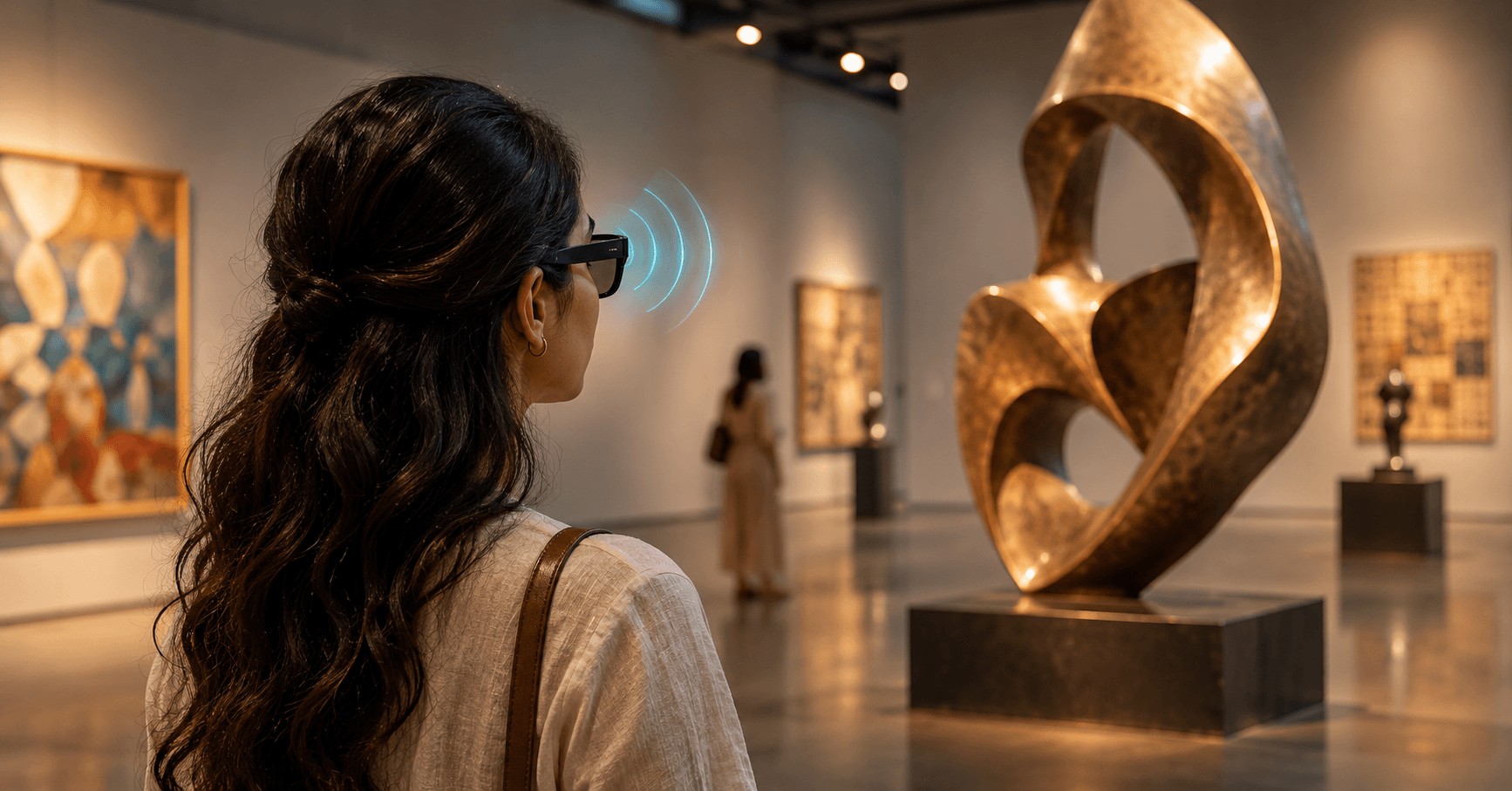
Step 1: Choose a hands-busy, eyes-up moment. Display-free glasses suit situations where people should not be looking at a screen: a visitor walking through a museum or showroom, a technician inspecting equipment, or a new employee following a site induction.
Step 2: Write for the ear, not the page. Keep each instruction short, give one step at a time, and let users say “repeat” or “next”. Test scripts by reading them aloud while walking, not sitting at a desk.
Step 3: Use the camera with care. The camera and Gemini let users ask questions about what they see, which is powerful for guided tours and inspections. It also raises privacy concerns, and one UK minister has publicly floated the possibility of banning smart-glasses sales over covert recording. Get consent, post clear signage and keep recording off by default in sensitive areas.
Step 4: Put the visuals on the phone. Google says the glasses work with both Android and iPhone, so pair the audio experience with a companion mobile or web page for maps, diagrams and records that genuinely need a screen.
Step 5: Pilot small, then add displays. Start with one route or one procedure, measure completion time and user feedback, and reuse the same content structure when display-based glasses and headsets join your programme.
Audio-first glasses will not replace immersive XR, but they may become the most widely worn layer of it. Planning now means your content is ready when your audience puts them on.
At PointZero Immersive Lab, we design immersive experiences across headsets, browsers, mobile AR and now AI glasses, helping organisations build guided tours, training and brand experiences that work on whichever device people choose to wear.