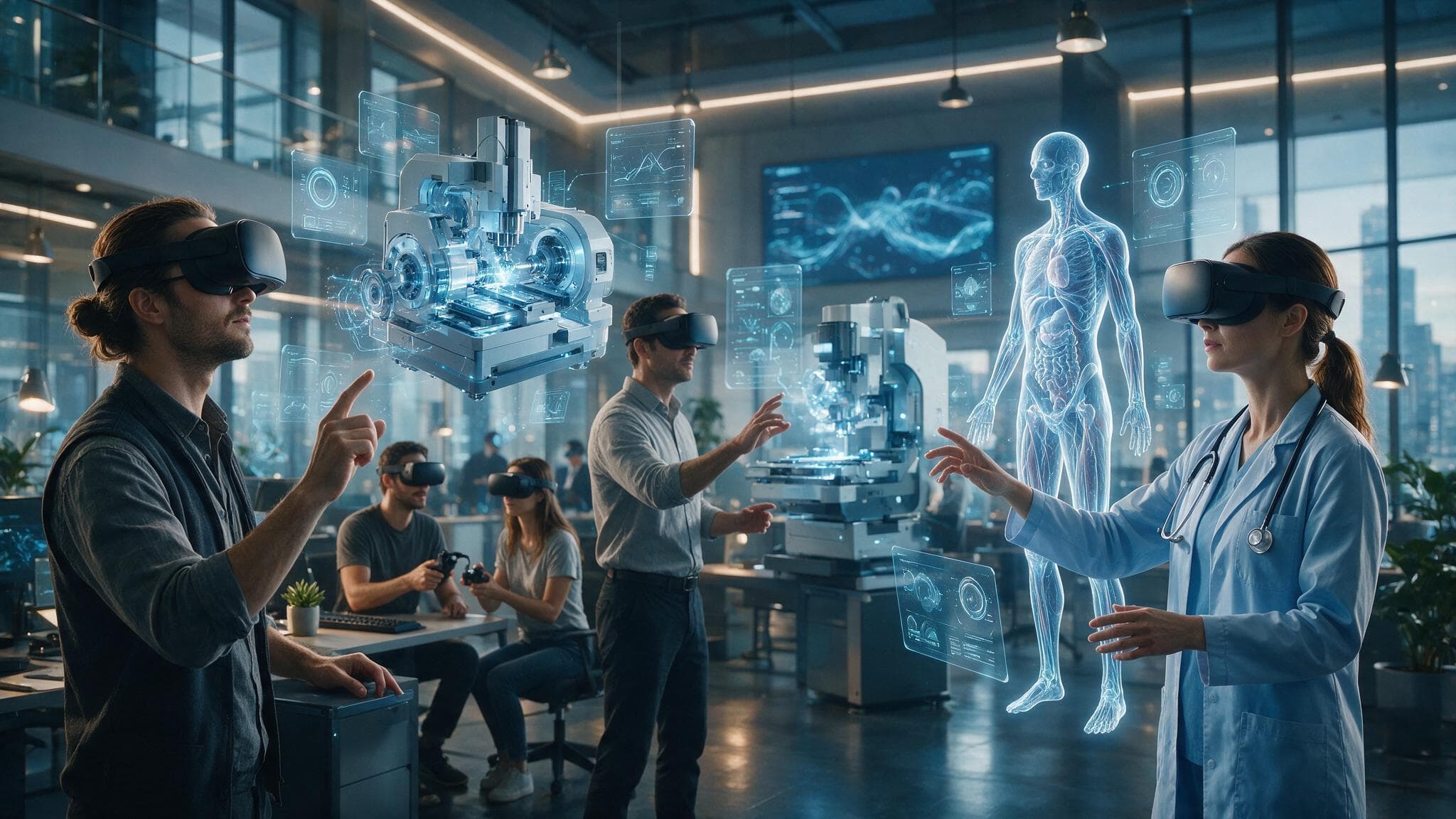

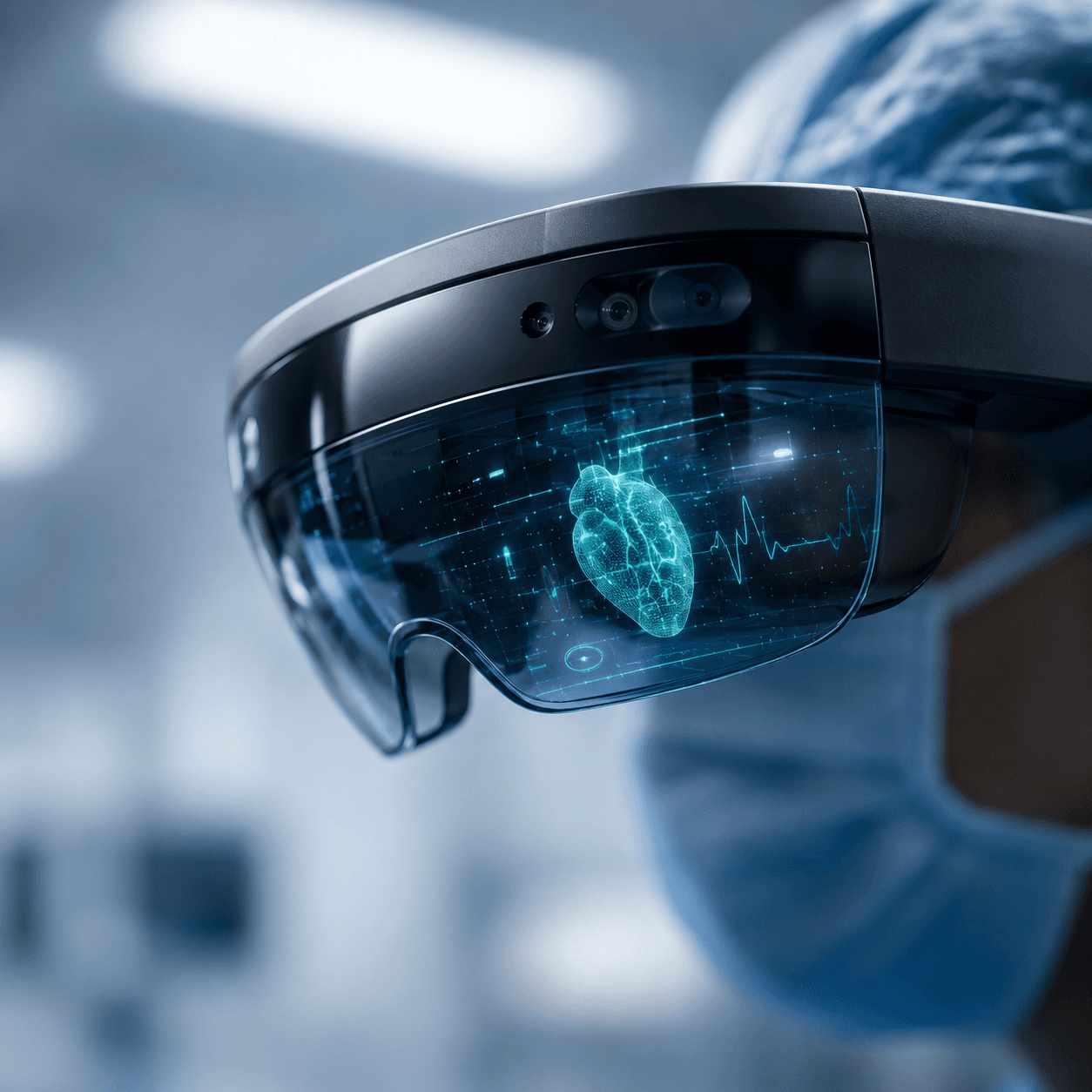
In October 2025, ophthalmologist Dr. Eric Rosenberg at SightMD performed the world’s first cataract surgery assisted by Apple Vision Pro, using the ScopeXR platform to fuse live microscope feeds with pre-operative diagnostic data inside the headset, and by April 2026, hundreds of cataract procedures had been performed with Vision Pro assistance. Mayo Clinic separately uses Vision Pro for surgical rehearsal and emergency response training, while Boston Children’s Hospital built an app training nurses on infusion pump operation.

Cataract surgery just became one of the first procedures in the world to be routinely assisted by mixed reality headsets, with hundreds of Apple Vision Pro-assisted operations already completed since the first case in October 2025. This blog treats that milestone as proof that clinical AR has moved past demonstration and pilot territory into repeatable, scalable surgical practice, and unpacks what actually made it possible. It explains the core technical breakthrough behind the ScopeXR platform, fusing a live microscope feed directly into the surgeon’s field of view alongside pre-operative diagnostic data, effectively giving a surgeon heads-up access to critical information without ever looking away from the patient. The piece walks through why this particular combination, live visual feed plus contextual data layered directly into a surgeon’s vision, represents a meaningfully different use case than earlier AR in healthcare, which tended to focus more on training simulations than live, in-procedure assistance. It covers the broader pattern this fits into, referencing how Mayo Clinic is separately using the same headset for surgical rehearsal and emergency response training, and how Boston Children’s Hospital built a nurse training application for infusion pump operation, showing that clinical AR is being adopted across multiple distinct use cases rather than a single narrow application.
A section will address why healthcare has become one of the fastest-moving sectors for enterprise AR and VR adoption, pointing to the combination of high-stakes precision work, a strong existing culture of simulation-based training, and a clear, measurable return in the form of fewer errors and faster skill acquisition. The blog also covers what this shift means for hospitals and health systems that have not yet begun exploring immersive technology, framing the conversation not as whether to explore mixed reality but which specific workflow, live surgical assistance, procedural training, or patient communication, offers the clearest starting point for their own organization. It will touch on the practical realities of adoption too, including the level of clinical validation and regulatory consideration that responsible healthcare AR deployment requires before it reaches live patient care. Clinical AR in surgery, mixed reality healthcare training, and immersive surgical assistance are the throughlines here, framed as an active, accelerating shift in how procedural medicine is practiced rather than a distant future possibility.