
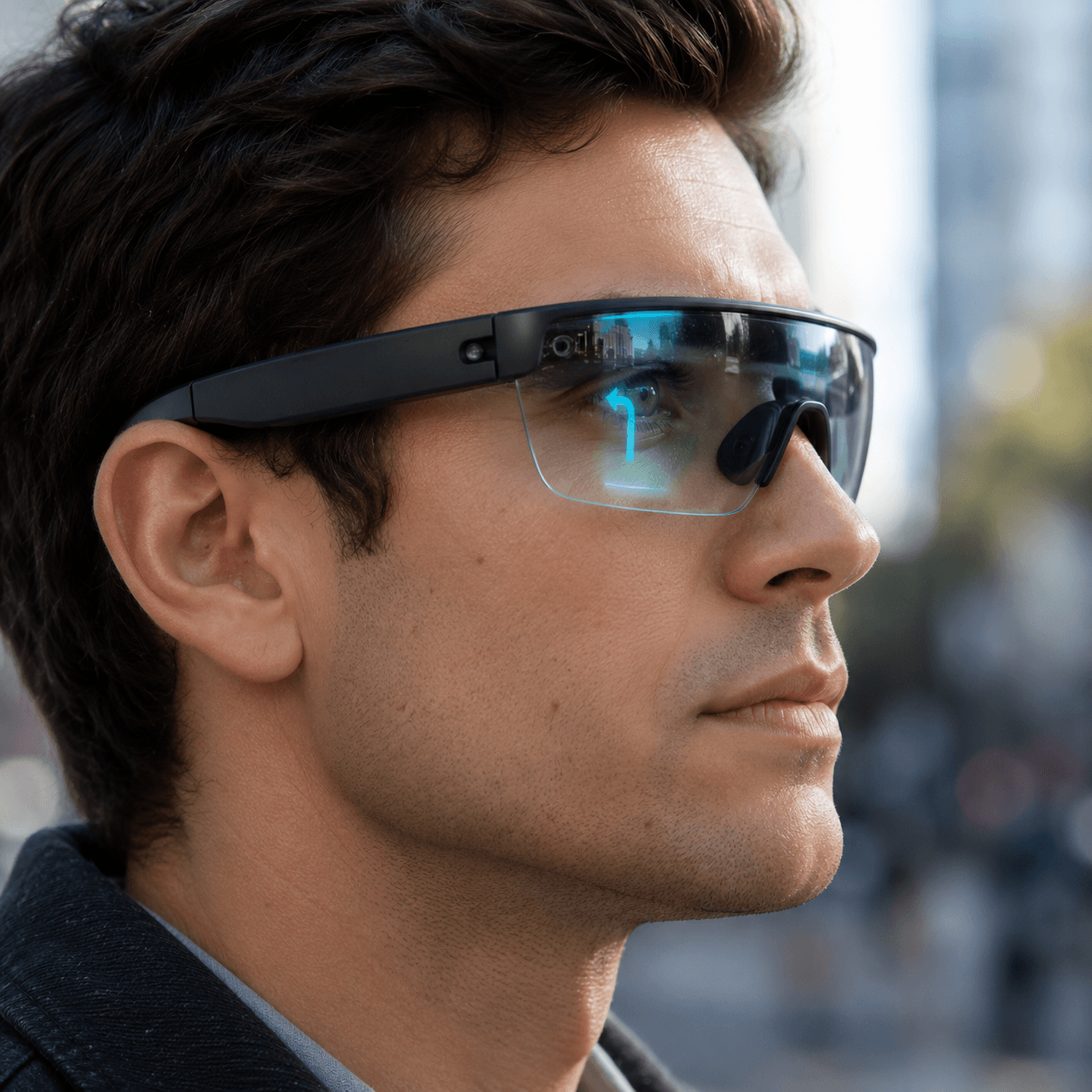
XREAL AURA, a hybrid pairing Android XR glasses with a hands-on review covering field of view, resolution, and its dedicated spatial computing puck, integrates Google’s Gemini AI assistant and Google Maps directly into the AR glasses experience, positioning the device between a traditional VR headset and lightweight AR smart glasses.

Most AR glasses reviews focus on display quality and comfort, but the most interesting part of XREAL AURA’s early coverage is what happens once you look past the hardware, a genuinely integrated AI assistant and mapping experience built directly into the glasses through Google’s Gemini and Google Maps. This blog explores why pairing capable AR hardware with an established AI assistant and mapping platform represents a meaningfully different approach than glasses relying purely on their own proprietary software stack. It opens by explaining the hybrid positioning XREAL AURA occupies, sitting between a full VR headset and lightweight display-only AR glasses through its dedicated spatial computing puck, a separate compute unit that offloads processing while keeping the glasses themselves lighter than a fully standalone device. The piece walks through what having Gemini integrated directly into an AR glasses experience actually enables in practice, covering contextual, hands-free assistance that understands what a wearer is looking at or asking about without requiring a phone to be pulled out, and how this kind of integration represents a meaningfully more useful default experience than glasses that ship with a thin, unfamiliar software layer users have to learn from scratch. It covers why Google Maps integration specifically matters as a proof point for AR glasses utility, since navigation is one of the most universally understood, immediately valuable use cases for heads-up AR information, giving even AR-skeptical users an intuitive reason to actually use the glasses in daily life rather than leaving them in a drawer after initial novelty wears off.
A section will address what this integration approach signals for the broader Android XR ecosystem, arguing that glasses built to plug directly into Google’s existing AI and mapping infrastructure benefit from continuous improvement to those underlying services without requiring the glasses manufacturer to build and maintain comparable capability independently. The blog also touches on what this means for businesses thinking about AR content and app development, since building on top of an established platform like Android XR with deep Google service integration likely offers a more stable, better-supported foundation than betting on a smaller manufacturer’s closed, proprietary software ecosystem. Android XR smart glasses, AI-integrated AR assistants, and everyday AR utility are the throughlines here, treating a hands-on review as a signal for where mainstream AR glasses usefulness is actually heading.