
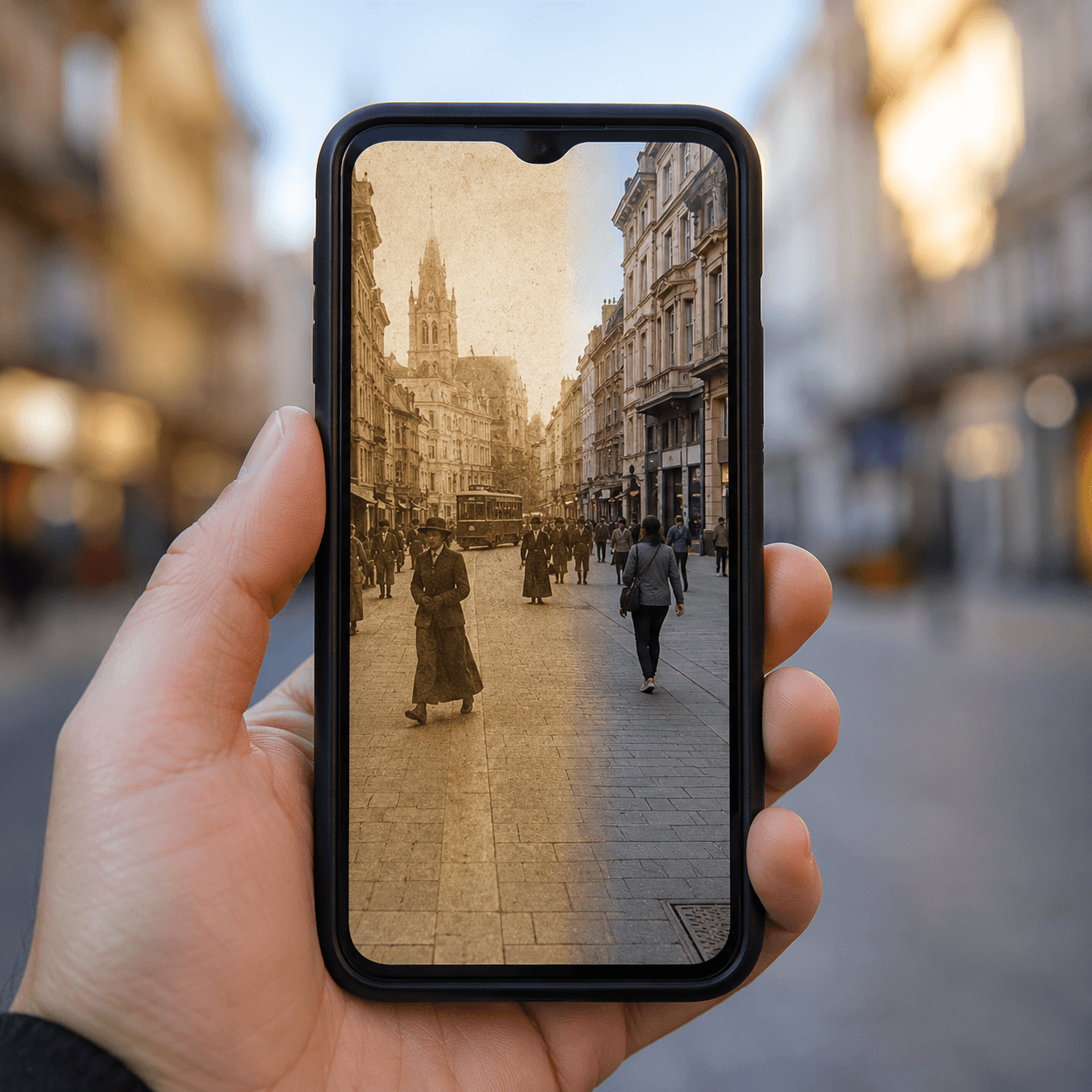
StreetMuseum, run by the Museum of London, overlays historical photographs directly onto London streets through AR, while similar projects including Göteborg’s AR Guide in Sweden and Ancient Augmented Reality reconstructions across the EU and US are creating AR reconstructions of historical architecture, part of a growing category of location-based heritage AR experiences.
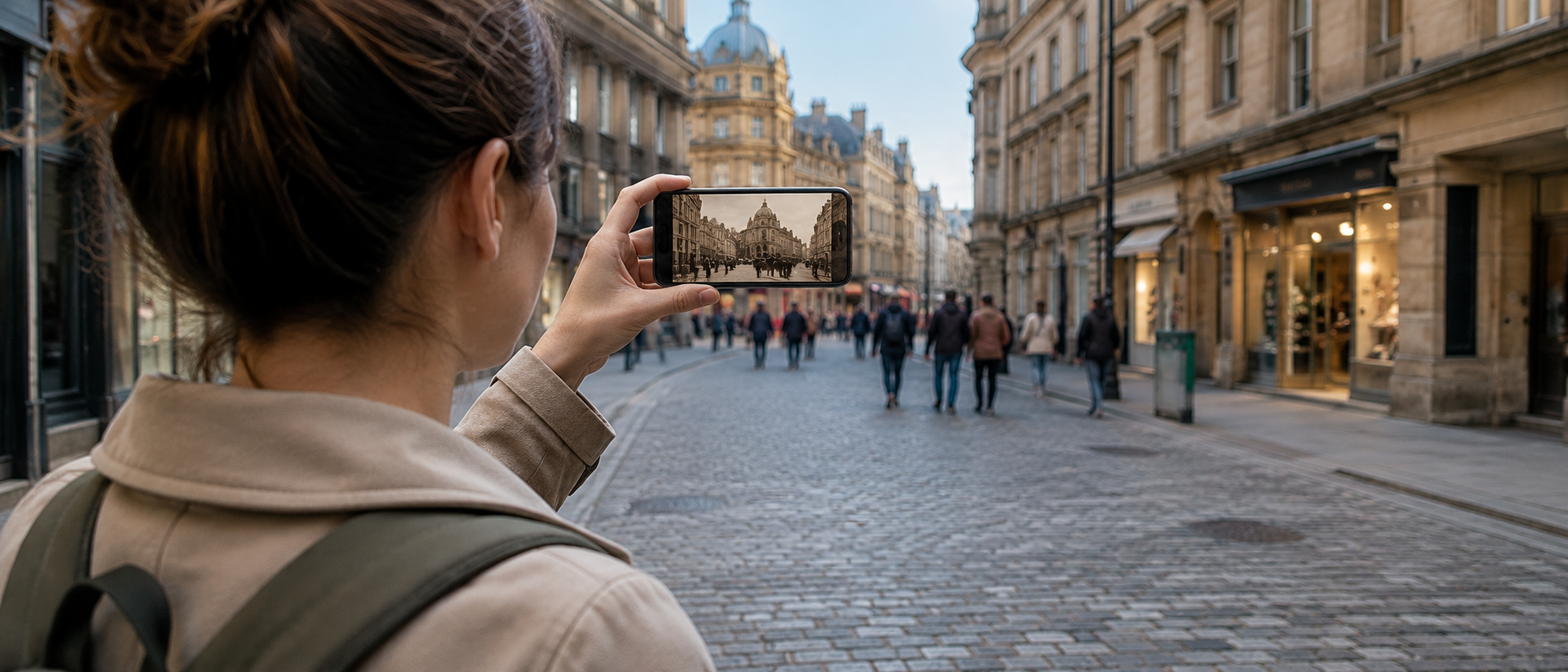
StreetMuseum’s core idea is deceptively simple, hold up a phone on an ordinary London street and see a historical photograph of that exact spot layered directly over the present-day view, but that simplicity is exactly what makes it such a genuinely instructive model for heritage and cultural institutions considering their own AR investment. This blog breaks down why this specific approach, and similar projects like Sweden’s Göteborg AR Guide and the broader Ancient Augmented Reality reconstruction initiatives across the EU and US, work so well, and what heritage organizations should learn from the pattern connecting all of them. It opens by explaining the core experiential shift this kind of location-based AR creates, that history stops being something you read about in a plaque or exhibit and becomes something you literally see layered onto the exact physical location where it happened, a fundamentally more visceral and memorable way to engage with historical content than traditional signage or guidebooks. The piece walks through why using genuine historical photographs specifically, rather than artistic reconstructions, matters so much for StreetMuseum’s credibility and impact, since real archival imagery carries an authenticity and emotional weight that an illustrated recreation cannot fully replicate, directly connecting a visitor to documented history rather than an artist’s interpretation of it. It covers what the Göteborg AR Guide’s character-driven storytelling approach adds to this model, using AR characters to narrate a city’s history rather than relying purely on visual overlay alone, demonstrating that combining visual reconstruction with narrative voice creates a richer, more engaging experience than either element alone.
A section will address what the Ancient Augmented Reality project’s approach to reconstructing ancient architecture reveals about a different but related use case, letting visitors see structures that no longer physically exist at all rather than simply overlaying historical imagery onto structures that are still standing, a meaningfully different technical and creative challenge requiring genuine architectural reconstruction rather than archival photo layering. The blog also touches on what all three approaches share as a common lesson for heritage organizations evaluating their own AR investment, that the strongest location-based heritage AR experiences are tied to a specific, physical place rather than existing as standalone content, making the physical site itself an essential, irreplaceable part of the experience rather than incidental to it. Location-based heritage AR, historical photo overlay technology, and cultural site storytelling are the throughlines here, using three distinct, proven models to give heritage and cultural institutions a genuinely practical framework for their own AR content strategy.