
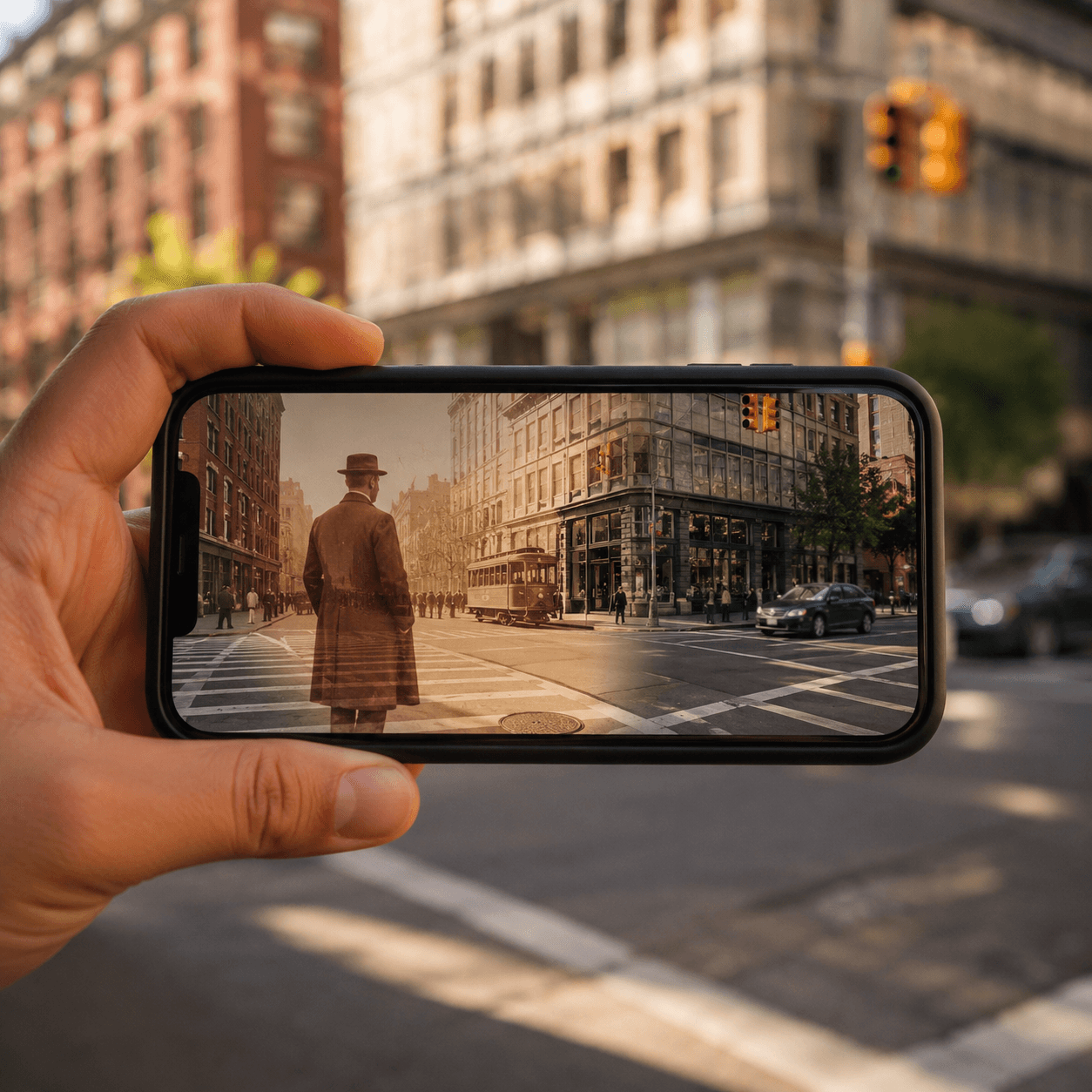
Ubisoft and Sugar Creative are developing location-based Assassin’s Creed XR experiences for New York and Boston, using Niantic’s VPS to anchor historic moments to real-world locations.

A globally recognized game franchise choosing to anchor its content to actual physical streets in New York and Boston, rather than staying purely digital, represents a genuinely different distribution model than typical game content, and the specific technology making this possible, Niantic’s VPS, visual positioning system, deserves a closer look for what it reveals about location-based AR’s growing precision and reliability. This blog breaks down how VPS-anchored AR actually works, and why franchise-level investment in this technology matters for the broader location-based AR industry. It opens by explaining what makes VPS technology different from simpler GPS-based location AR, since GPS alone is only accurate to within several meters, nowhere near precise enough to convincingly anchor digital content to a specific building facade or street corner, while visual positioning systems use camera-based recognition of real-world visual features to achieve dramatically more precise, stable anchoring. The piece walks through why this precision matters so much for a historical storytelling application specifically, since anchoring a historical scene convincingly to the exact real-world location it’s meant to represent requires the digital content to stay stable and accurately positioned as a user moves around, a level of precision that would break the entire illusion if the technology couldn’t maintain accurate placement. It covers what Ubisoft and Sugar Creative’s choice of New York and Boston specifically suggests about the content strategy, both cities with genuinely rich, well-documented Revolutionary War-era history that aligns naturally with Assassin’s Creed’s historical fiction premise, demonstrating a deliberate pairing of real urban history with the franchise’s existing storytelling strengths rather than an arbitrary location choice.
A section will address why a major game publisher investing in this kind of location-based AR matters as a signal for the broader industry, since franchise-level investment from an established entertainment company tends to validate the underlying technology’s reliability and audience appeal in ways that benefit the entire location-based AR category, not just this specific project. The blog also touches on what this pattern means for tourism boards, heritage sites, and cultural institutions considering their own location-based AR investment, reinforcing that pairing genuine historical accuracy with technically precise, stable AR anchoring is what separates a genuinely compelling heritage AR experience from a gimmicky overlay that quickly loses its novelty. Location-based entertainment AR, visual positioning system technology, and franchise-driven heritage storytelling are the throughlines here, breaking down what makes VPS-anchored historical AR technically convincing.