

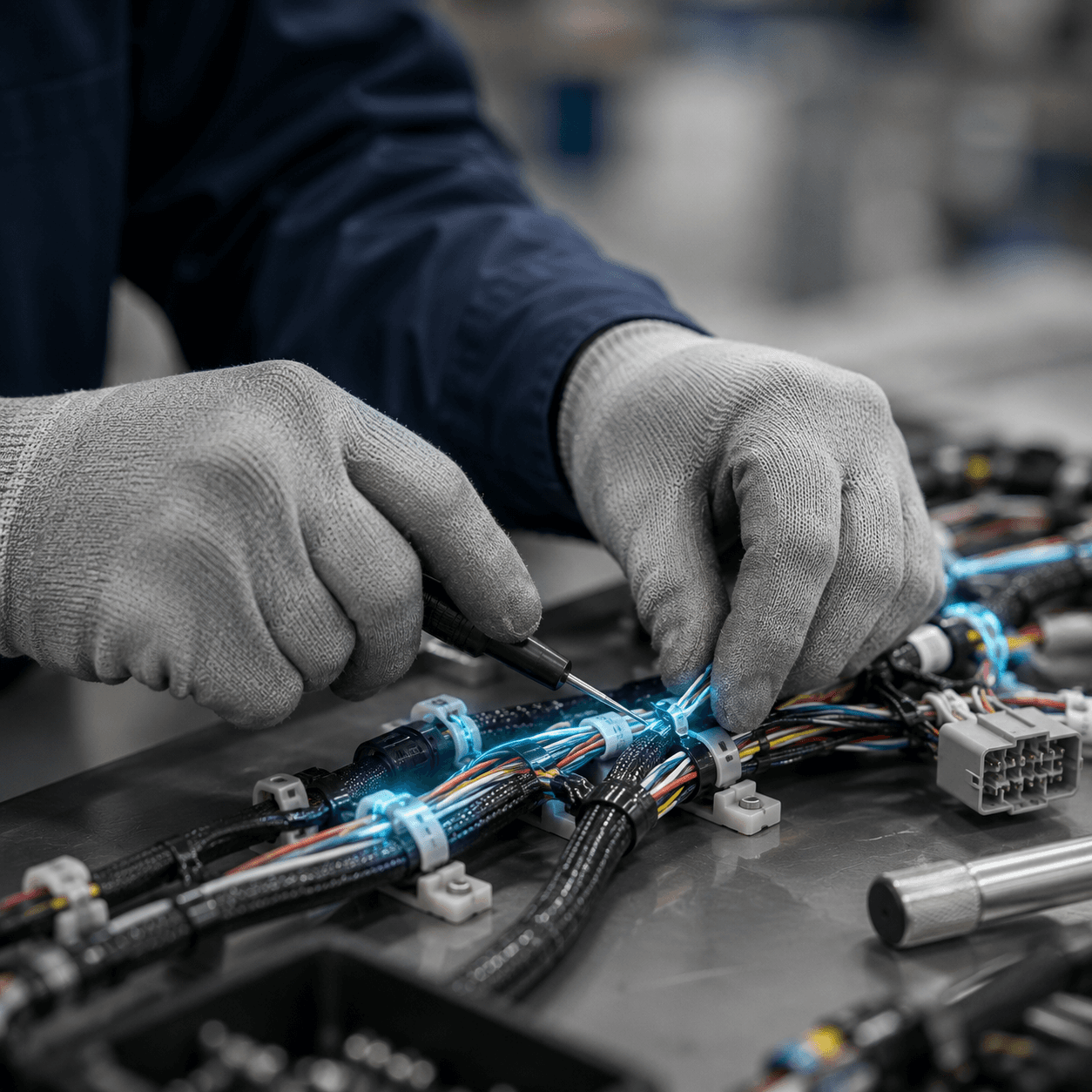
Augmented reality in manufacturing cuts training time 40 to 50 percent and reduces assembly errors by up to 90 percent across automotive, aerospace, and electronics plants, according to Boeing and Lockheed Martin production data. Boeing’s wire harness assembly used to take technicians 45 days using paper schematics; with AR overlays from Skylight smart glasses, the same job now takes 25 days, and PTC’s 2025 State of Industrial AR report found 72 percent of manufacturers who deployed AR solutions reported positive ROI within the first year.
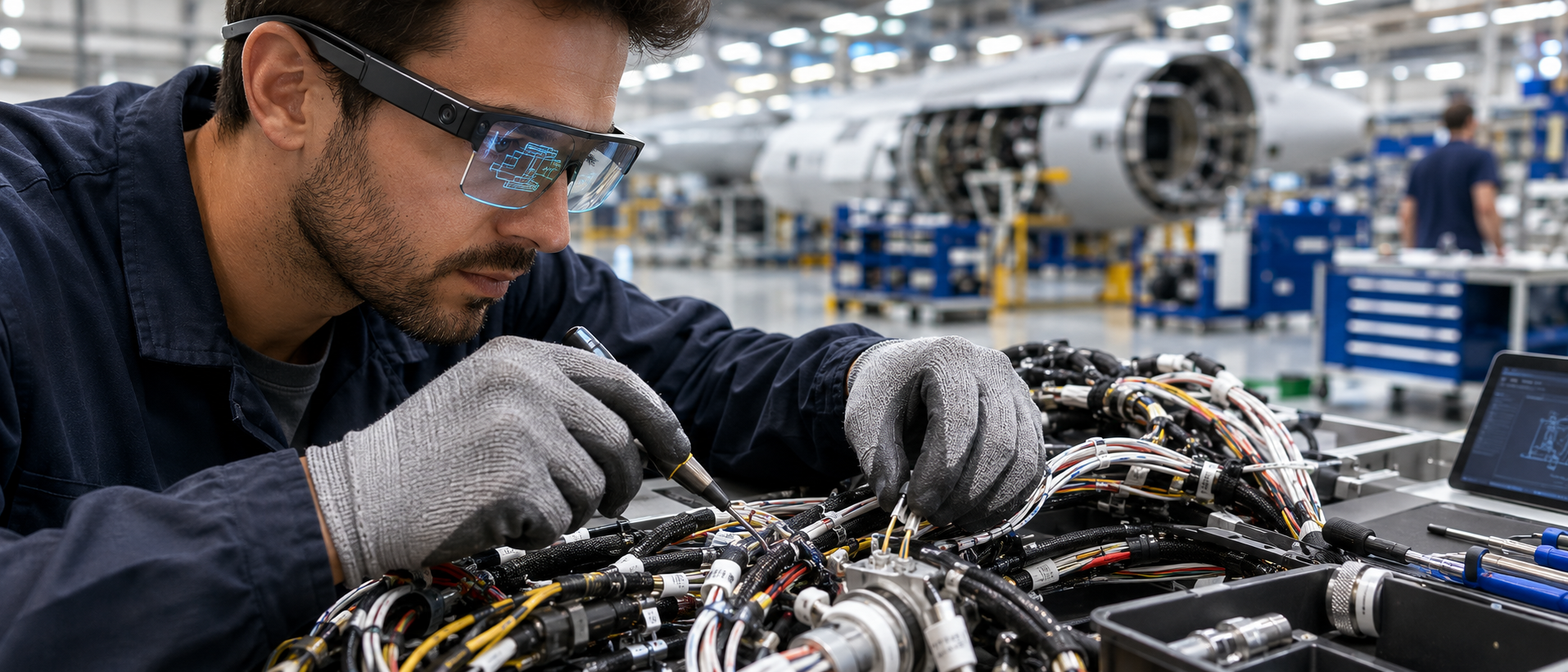
A wire harness assembly job at Boeing used to take technicians 45 days working from paper schematics. With AR overlays delivered through smart glasses, that same job now takes 25 days, a reduction of more than 40 percent on one of the most complex, error-prone tasks in aerospace manufacturing. This blog uses that single data point as an entry into a much larger dataset now available on AR in manufacturing, covering documented error reductions of up to 90 percent, training time cuts of 40 to 50 percent, and a PTC industry report showing 72 percent of manufacturers who deployed AR reported positive ROI within their first year. Rather than treating these as abstract statistics, the piece walks through exactly what changes on the floor when AR overlays replace paper schematics or static digital manuals, including how step-by-step visual instructions overlaid directly onto a physical part reduce the cognitive load of translating a 2D diagram into a 3D action, and why that translation step is where most assembly errors actually originate. It breaks down the four proven use case categories driving these results, assembly guidance, remote expert assistance, quality inspection, and maintenance, and explains why manufacturers who start with a single, well-defined use case tend to reach positive ROI faster than those attempting a full plant-wide rollout on day one. The article also covers the practical integration reality many vendors underplay, noting that connecting AR systems to existing ERP, MES, and IoT data layers is where a significant share of any deployment timeline is actually spent, and why planning for that integration work upfront prevents the most common cause of stalled AR projects. A section will address hardware selection, comparing how different device categories fit different environments and budgets, from tablet-based AR for lighter deployments to dedicated headsets for fully hands-free tasks. The piece closes by connecting these aerospace and automotive-proven results to the broader manufacturing base, arguing that mid-size manufacturers do not need Boeing’s budget to see comparable percentage gains, only a well-scoped starting use case and the right implementation partner. AR-guided assembly, industrial augmented reality ROI, and AR training for manufacturing are the throughlines here, all grounded in numbers rather than projections.