

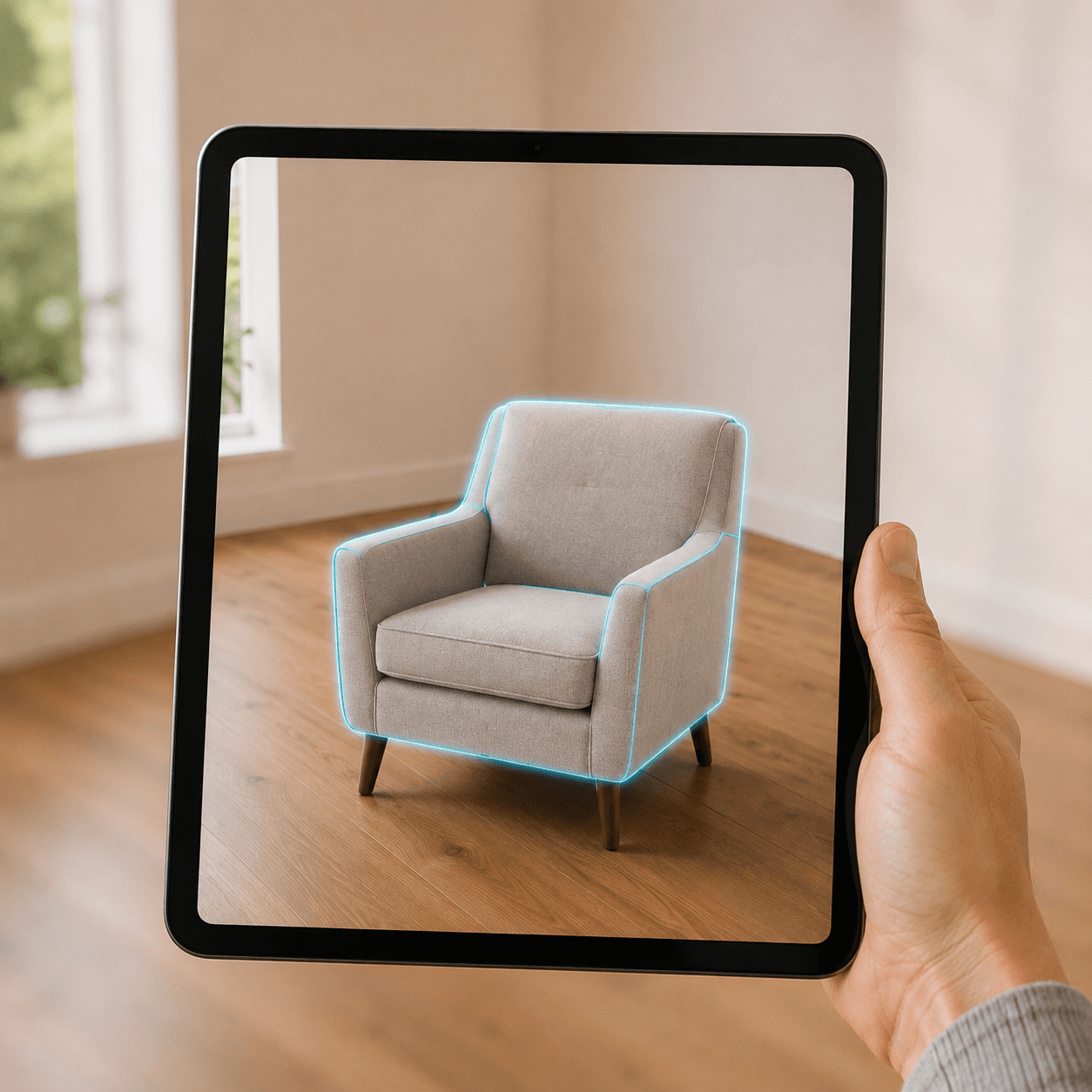
AR apps let shoppers place life-size 3D models of furniture and appliances into their own physical space to check dimensions, style, and color fit before purchase, addressing a category where, as the source notes, “for big purchases like furniture or appliances, seeing is believing.”
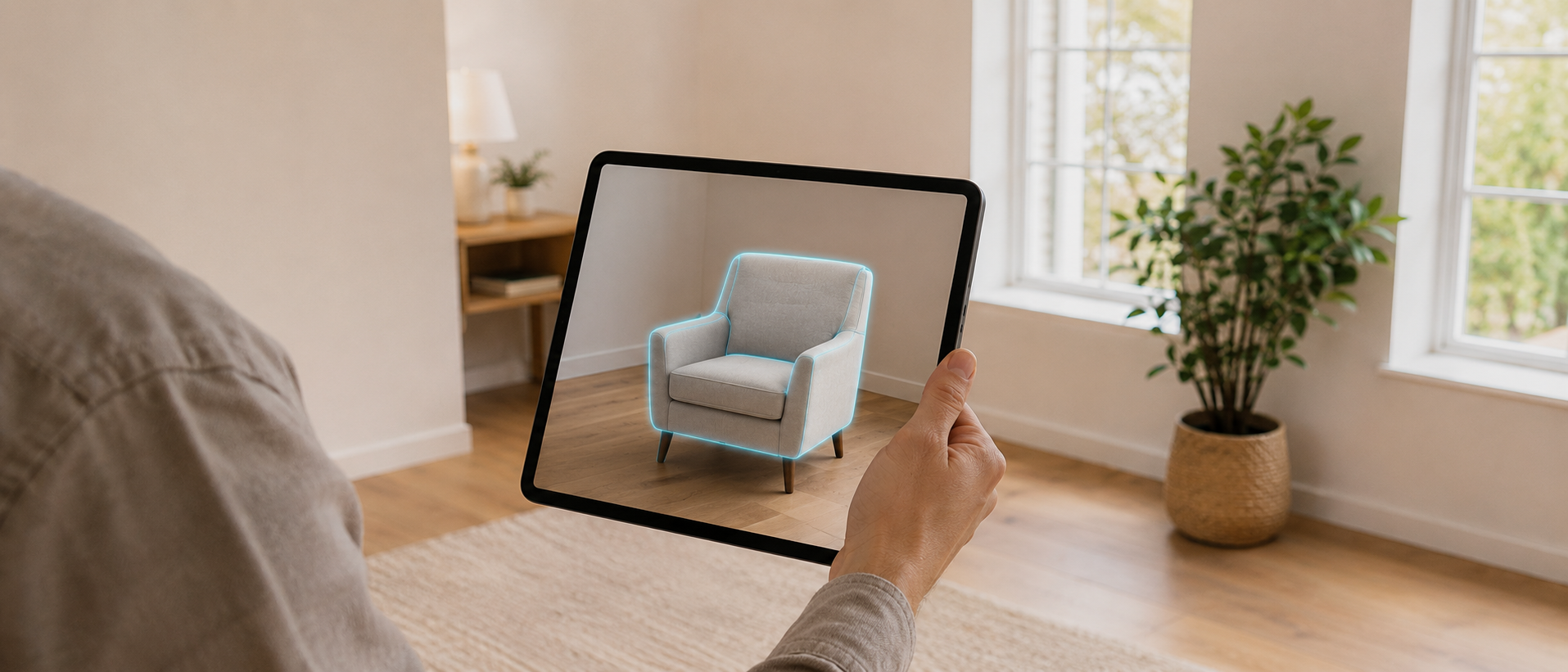
Furniture and large appliance purchases carry a specific kind of risk online shopping has always struggled to solve, not just whether a customer likes how something looks, but whether it will physically fit and feel right in their actual home, a question that has traditionally required either an in-person showroom visit or the genuine risk of ordering something that arrives and simply doesn’t work in the intended space. This blog explores why life-size AR placement specifically addresses this category’s biggest purchase barrier, and why furniture and home goods represent one of the clearest, highest-value use cases for AR visualization in retail. It opens by explaining the specific uncertainty this technology resolves, that a sofa’s dimensions on a spec sheet are technically accurate but genuinely difficult for most shoppers to translate into a real sense of how that piece will actually occupy their living room, leaving room dimension and scale as one of the most common sources of furniture purchase regret and, ultimately, costly returns. The piece walks through how AR life-size placement changes that experience, letting a shopper point their phone at an empty corner of their actual room and see an accurately scaled 3D model of the exact product standing in that space, immediately answering questions about fit, proportion, and how a piece’s color and style actually read against their existing room rather than in a staged showroom photo. It covers why this application matters disproportionately for high-value, low-frequency purchases specifically, since furniture and major appliances typically involve higher price points and higher return costs than smaller retail categories, meaning even a modest reduction in mismatched purchases delivers outsized savings for retailers compared to the same technology applied to lower-cost items.
A section will address the practical retail advantage this creates beyond pure returns reduction, arguing that removing the need for an in-person showroom visit to confidently evaluate fit and scale genuinely shortens the furniture buying decision timeline, letting retailers close sales that might otherwise stall while a customer debates whether to make the trip to see a piece in person. The blog also touches on why this specific use case tends to build strong customer trust and repeat purchase behavior, since a shopper who successfully used AR placement to buy one piece with confidence is considerably more likely to trust and use that same tool for their next furniture purchase, compounding the technology’s value across a customer’s full home furnishing journey rather than a single transaction. AR furniture visualization, life-size product placement, and big-ticket retail conversion are the throughlines here, explaining why furniture and home goods represent one of AR retail’s most naturally compelling applications.