

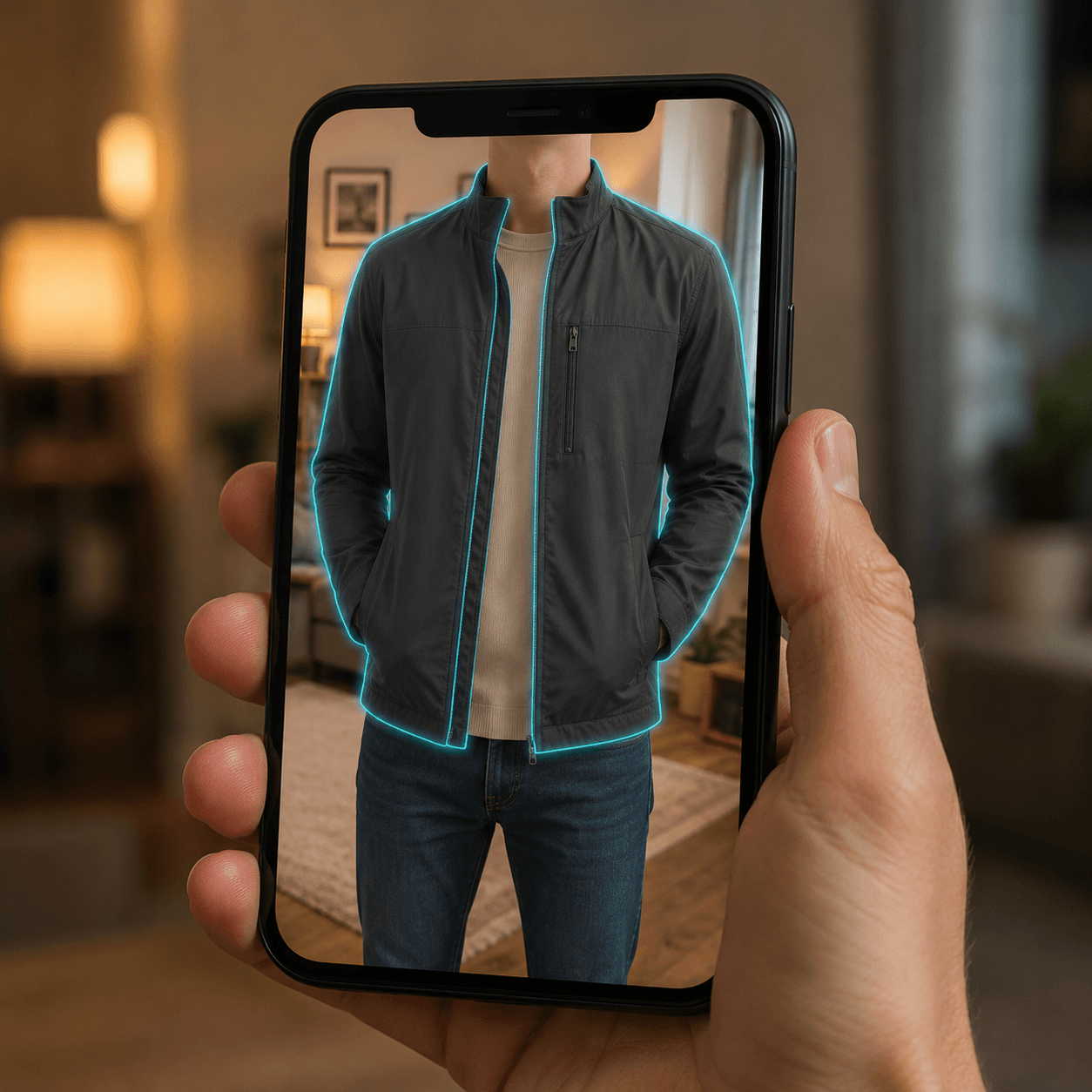
Products with 3D or AR content convert 94% higher than those without, according to Shopify data. Fashion label Rebecca Minkoff found customers were 65% more likely to place an order after interacting with a product in AR, pet-gear maker Gunner Kennels recorded a 40% conversion increase, and on Snapchat, users who engage an AR shopping lens are 2.4 times more likely to buy, with AR campaigns generating 6.4 times higher purchase intent than traditional video.

A 94% conversion lift is a large enough number that it’s worth pulling apart brand by brand to understand whether it holds up across different product categories, and the individual results from Rebecca Minkoff, Gunner Kennels, and Snapchat’s broader platform data all point in the same direction, confirming this isn’t a single outlier case study but a consistent pattern worth building strategy around. This blog breaks down what’s common across these different brand results and why AR specifically closes the exact gap that stops online shoppers from completing a purchase. It opens by explaining the underlying mechanism driving all of these numbers, that AR answers the “will this work for me?” question that stops a shopper mid-consideration, a question static product photography, no matter how well shot, simply cannot resolve for the shopper on their own. The piece walks through why Rebecca Minkoff’s 65% order likelihood increase specifically matters as a fashion-category result, since apparel purchases carry genuine fit and appearance uncertainty that AR try-on directly addresses, while the 27% lift from viewing a product in 3D alone, without the full AR try-on layer, shows that even a lighter-touch visualization improvement delivers meaningful, if smaller, results. It covers why Gunner Kennels’ 40% conversion increase matters as a proof point outside fashion entirely, demonstrating that the same underlying uncertainty-reduction principle applies to pet gear and presumably a wide range of other physical product categories where scale, fit, or appearance genuinely affects the purchase decision.
A section will address what the Snapchat platform data adds to this picture, since users engaging an AR shopping lens buying at 2.4 times the rate of non-engaged users, alongside AR campaigns generating 6.4 times higher purchase intent than traditional video, demonstrates this effect holds not just on brand websites but within social commerce and discovery contexts, where purchase intent is often lower to begin with, making the relative lift even more commercially significant. The blog also touches on the 66% lower return rate among AR shoppers referenced in the same research, explaining why this matters as much as the conversion lift itself, since a sale that gets returned isn’t really a sale, AR’s ability to set accurate expectations before purchase protects the conversion gain rather than just inflating it temporarily. AR try-on conversion data, e-commerce visualization ROI, and fashion retail AR adoption are the throughlines here, breaking down a headline statistic into brand-specific, verifiable proof points.