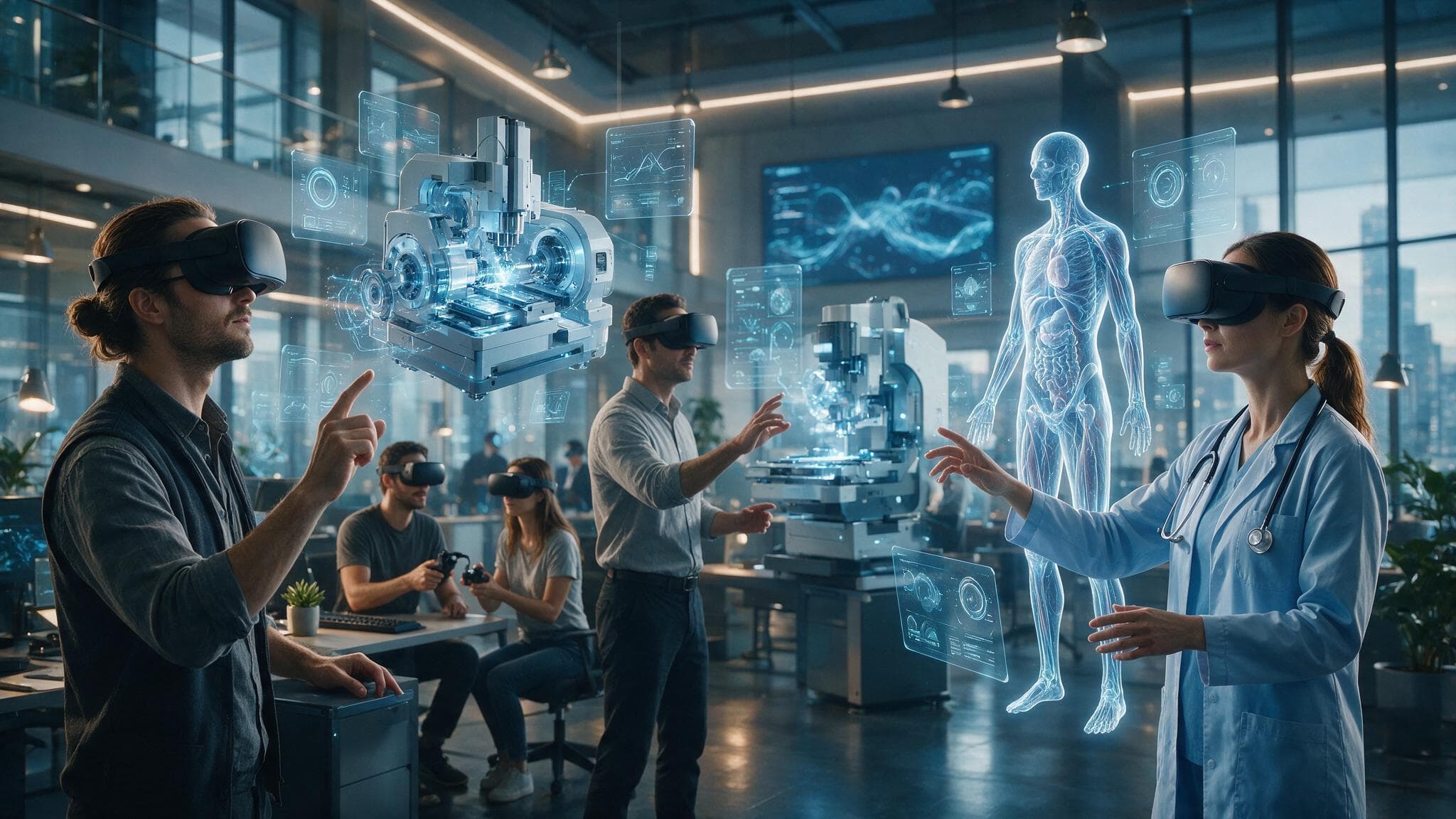

Smart glasses spent 2026 doing something nobody expected, going from gimmicky tech demo to legit eyewear category in about five months, with Meta keeping its lead, Google finally answering, and Apple moving from rumor to roadmap. Samsung officially announced it is entering execution phase on its own smart glasses, built on the Android XR platform in partnership with Google.
Smart glasses have quietly moved from a novelty shown off at developer conferences to a real hardware category, with Meta, Samsung, Google, and Apple all racing to define what everyday AR eyewear looks like. For years, augmented reality lived almost entirely on phone screens, held at arm’s length for a few seconds at a time. That is changing fast, and it changes what good AR content actually looks like. Businesses that built AR experiences for a phone screen now need to think about hands-free AR, heads-up displays, and glasses-first design if they want their content to stay relevant as this hardware becomes mainstream. This piece breaks down what wearable AR technology means for brands, product teams, and training programs already investing in immersive experiences. It covers the shift from tap-and-swipe interactions to glanceable, ambient information delivered through smart glasses, and why shorter, simpler visual hierarchies matter far more on a heads-up display than on a phone screen.
Field service AR, real-time overlays for technicians, and hands-free training content are already naturally suited to this shift, while brand campaigns built around scrolling or tapping through a phone will need real redesign work to translate. The blog walks through practical questions any business running AR experiences should be asking right now, including how their current AR content would perform on a heads-up display, whether their interaction design assumes hands are free or holding a device, and how much of their existing 3D and AR asset library could carry over to a glasses-based experience with minimal rework. It also touches on the AI layer increasingly built into smart glasses platforms, powering contextual, real-time responses rather than static content delivery, and what that means for how immersive experiences get built going forward. Rather than getting lost comparing specs across competing devices, the piece keeps its focus on a single practical idea: AR experience design is entering a new phase, and the businesses that start adapting their content strategy now will be ready before wearable AR reaches mainstream adoption, not scrambling to catch up after it does. Augmented reality for wearables, AR content strategy, and glasses-ready immersive design are all treated as one connected shift rather than separate trends, giving readers a single, clear framework for thinking about what comes next for their own AR investment.