


Ocutrx Technologies developed HemoLucence, a patent-pending technology that renders blood translucent in real time during surgery using digital volumetric reconstruction and de-scattering algorithms, with the feature built into the company’s OR-Bot 3D Surgical Microscope System now moving toward clinical trials in 2025 and 2026.
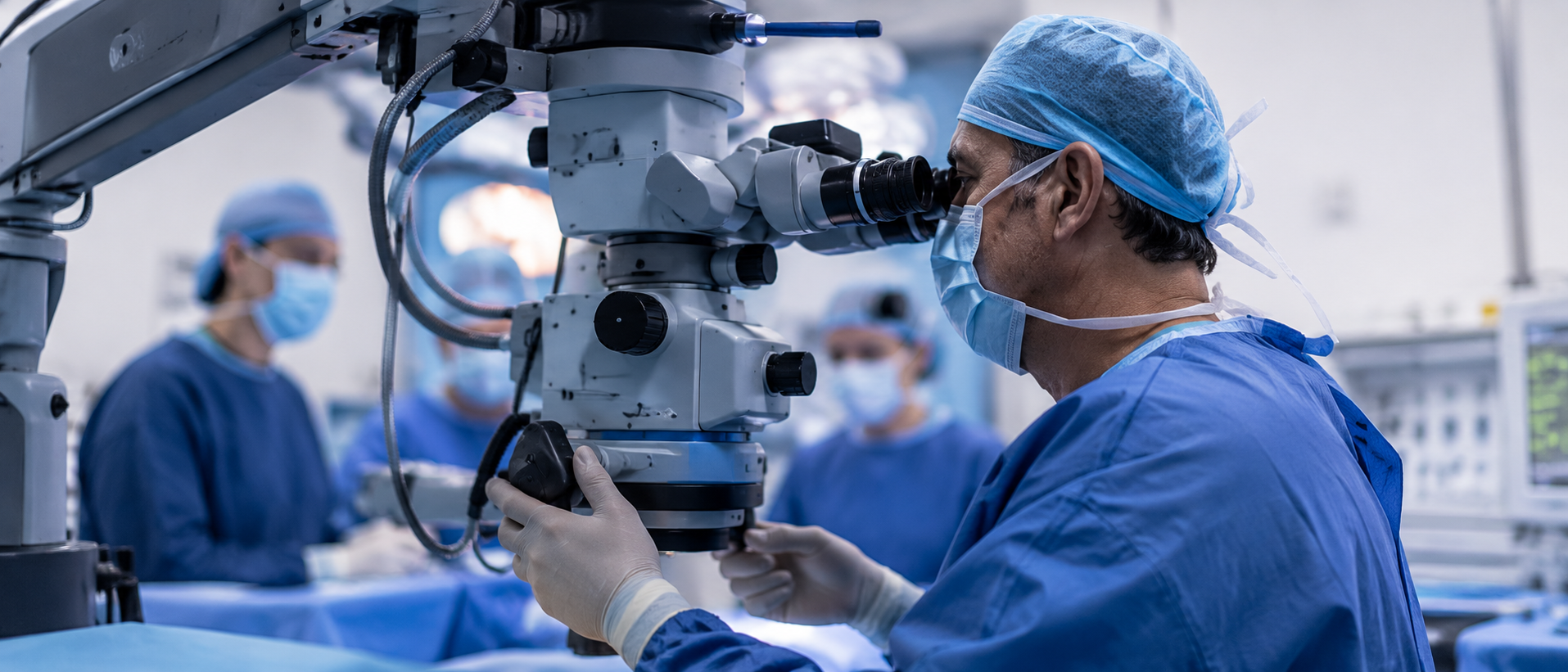
One of the most persistent, unglamorous challenges in surgery has always been simple, blood obscures the exact tissue a surgeon most needs to see clearly, and Ocutrx’s HemoLucence technology tackles that problem directly by rendering blood translucent in real time, letting surgeons see through pooled blood without pausing for suction or irrigation. This blog explores why this specific innovation, now advancing toward clinical trials, represents a genuinely different category of surgical visualization technology than typical AR overlays, and what it signals about where immersive medical imaging is heading. It opens by explaining the underlying technical approach in accessible terms, describing how the system uses advanced computational physics to distinguish between light absorbed by blood and light scattered by red blood cells, then reconstructs a clear three-dimensional view of the tissue and structures underneath using neural network algorithms, effectively solving an optical physics problem rather than relying on a simple digital filter. The piece covers why this matters so significantly for surgical outcomes, noting that uncontrolled bleeding forcing a pause in a procedure for suction or repositioning is a persistent source of extended surgery time and increased risk, meaning a technology that eliminates that interruption entirely could meaningfully improve both efficiency and patient safety across neurosurgery, orthopedics, and general surgery alike. It walks through what makes this technology notable within the broader surgical AR and VR conversation, since much of the existing coverage of immersive surgical tools focuses on training simulation and rehearsal, while HemoLucence represents a genuinely live, in-procedure visualization breakthrough operating in real time during an actual operation.
A section will address the realistic timeline and validation process still ahead, noting that the technology is moving toward clinical trials rather than already deployed in operating rooms broadly, an important distinction for readers to understand about where this innovation currently sits on the path from breakthrough demonstration to standard surgical practice. The blog also touches on the broader pattern this fits into across healthcare imaging, where computational physics and AI-driven reconstruction are increasingly being used to reveal information that would otherwise be physically obscured, a trend with implications well beyond this single application. Surgical visualization technology, real-time medical imaging AI, and next-generation surgical microscopy are the throughlines here, treating an emerging clinical technology as a genuinely significant marker of where immersive medical visualization is heading next.