
The U.S. Air Force has exercised a $2.9 million contract option with Palladyne AI, lifting the total value of its STRATFI program to over $10.6 million, funding further demonstrations that include “mixed reality teleoperation alongside autonomous robotic task execution.” Palladyne’s CEO called the funding decision “an unambiguous signal” that its embodied AI architecture is working at scale.
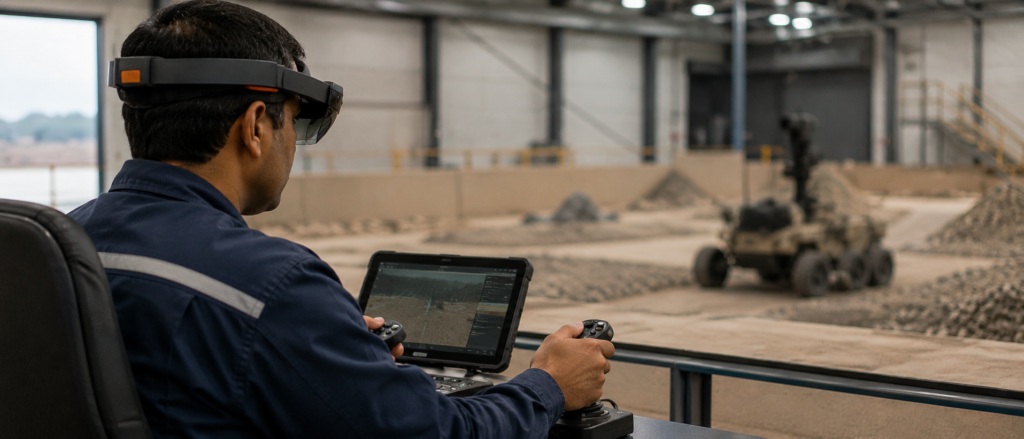
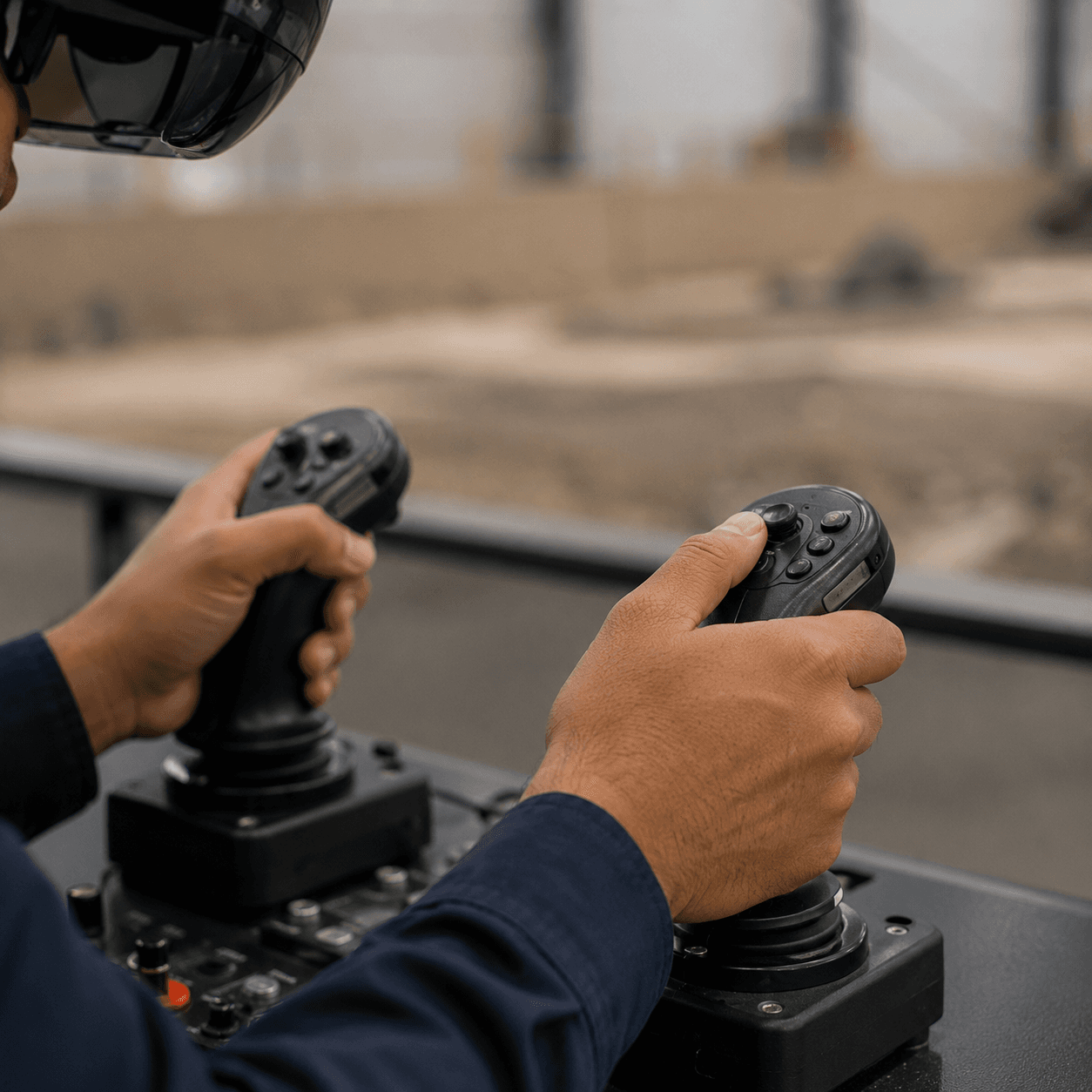
A defense customer committing nearly $3 million in additional funding after watching a technology perform in real-world conditions is a genuinely meaningful validation signal, and the fact that this specific funding round explicitly includes mixed reality teleoperation alongside autonomous robotic task execution points to a real, funded application of MR technology in one of the most demanding operational environments that exists. This blog breaks down what mixed reality teleoperation actually means in this context, and why its inclusion in an expanded Air Force contract matters for understanding where serious, well-funded MR applications are heading in defense and industrial robotics. It opens by explaining what teleoperation means as a robotics concept, a human operator remotely controlling or guiding a robotic system’s actions, and why adding mixed reality to that equation specifically improves the operator’s ability to understand and react to what the robot is actually encountering, giving them a genuinely spatial, immersive view of the robot’s environment rather than a flat camera feed alone. The piece walks through why the Air Force’s decision to fund additional demonstrations specifically, rather than simply continuing existing work unchanged, signals genuine confidence in this direction, since a demanding customer operating in complex, real-world environments choosing to expand funding after seeing performance represents exactly the kind of validation that distinguishes a genuinely working technology from an unproven pilot project. It covers why this matters beyond defense specifically, arguing that mixed reality teleoperation for autonomous robotic systems has clear civilian applications in hazardous industrial environments, remote infrastructure inspection, and any scenario where sending a human physically into a dangerous space is undesirable but full robotic autonomy isn’t yet trusted or capable enough to handle every situation independently.
A section will address what the broader STRATFI program context reveals, noting this funding builds on a program originally awarded in September 2023, with the Air Force increasing investment as the technology matured and demonstrated results over multiple years, illustrating the kind of sustained, multi-year validation cycle serious defense technology adoption typically requires rather than a single quick pilot decision. The blog also touches on why hardware-agnostic architecture matters for this kind of platform, since Palladyne’s system is built to integrate across robotic systems and sensor suites rather than being locked to a single robot manufacturer, a design principle directly relevant to any business evaluating MR-integrated robotics platforms for their own long-term flexibility. Mixed reality teleoperation, autonomous robotics funding, and defense-validated MR applications are the throughlines here, breaking down a contract expansion into a genuine signal for where funded, real-world MR applications are proving out.