

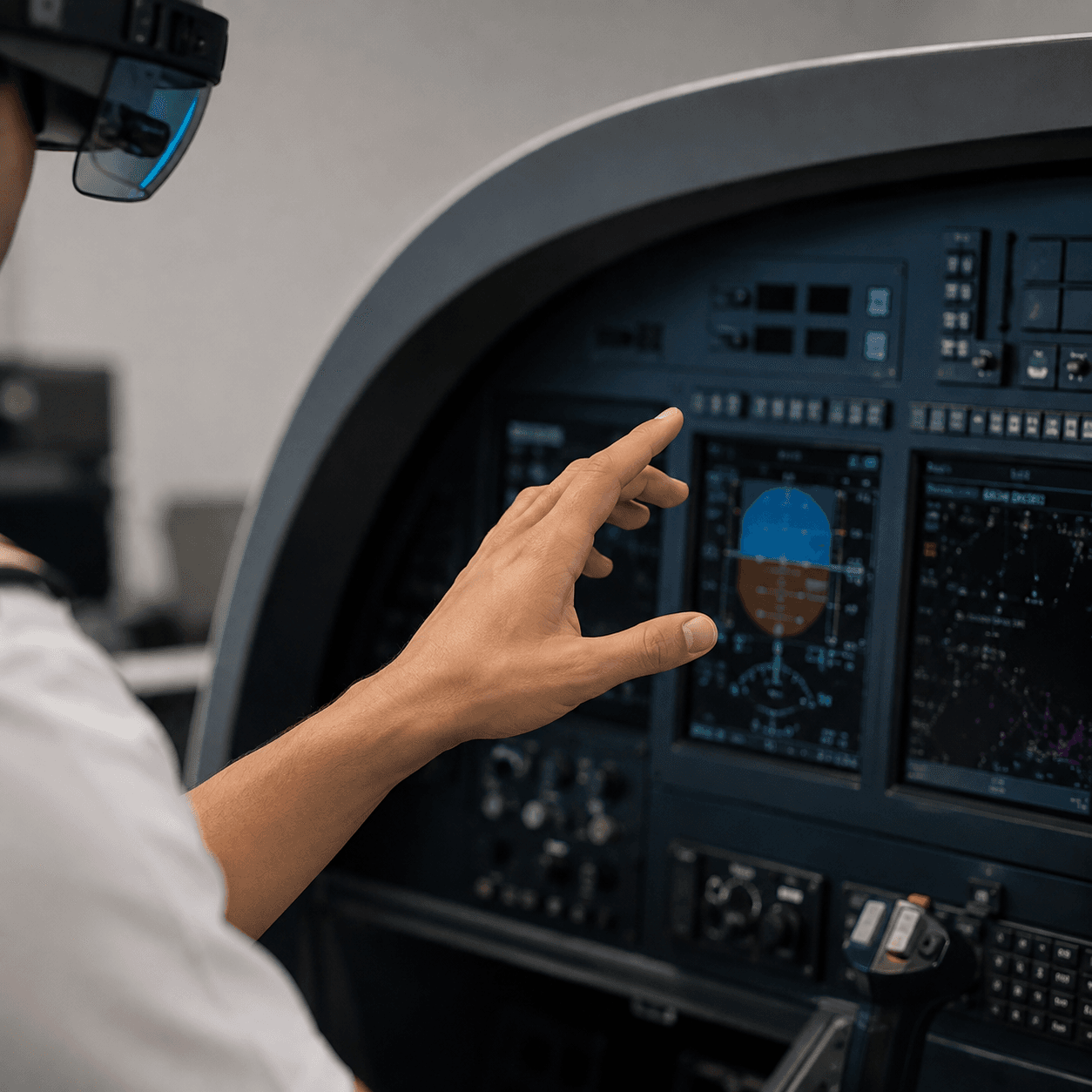
A global pilot shortage of around 15,000 airline pilots by 2026 in the US alone has been projected, driven by growing fleets, new regulatory requirements, retirements, and attrition, with researchers identifying AR applications for procedure training, aircraft systems training, aircraft familiarization, maintenance training, and hands-free remote assistance as ways to help bridge the gap between classroom instruction, simulation, and real operational readiness.
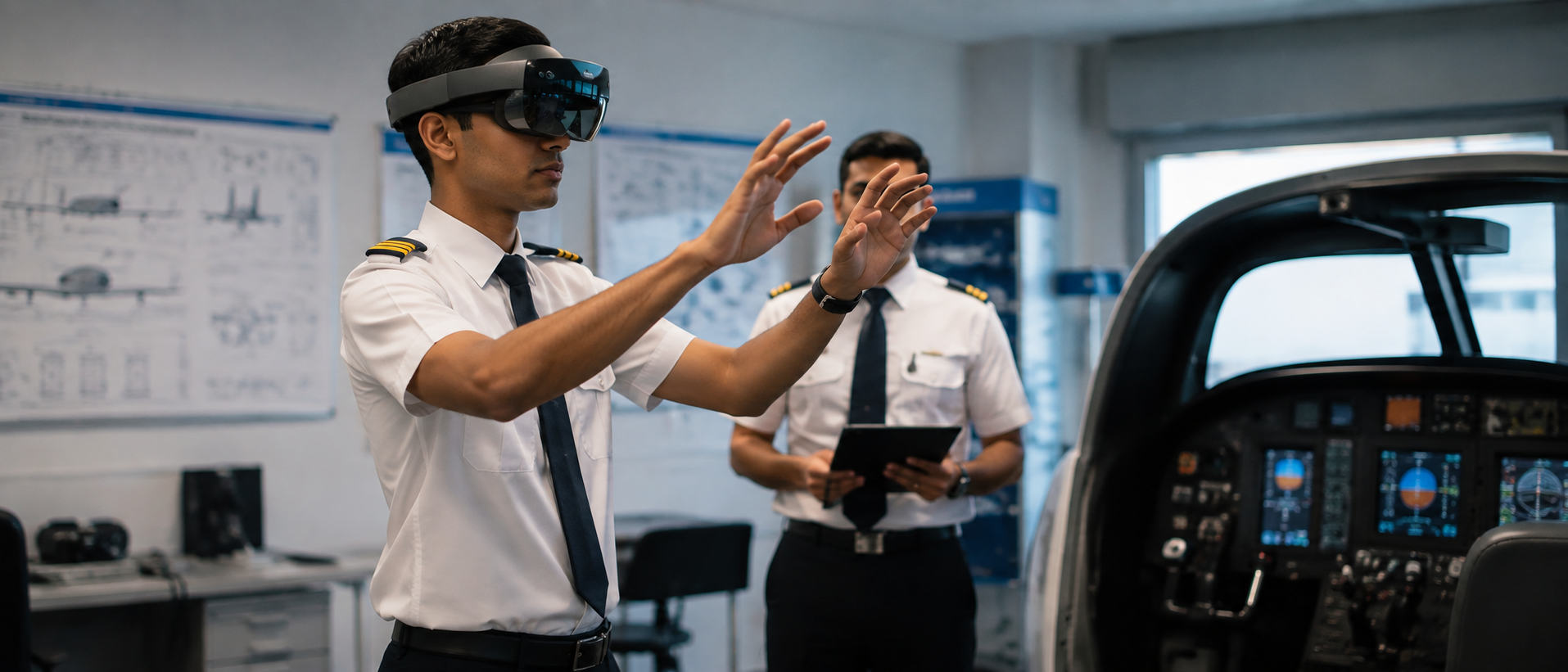
A shortage measured in the thousands of pilots isn’t a problem that gets solved by simply training people faster through the same traditional pipeline, it requires genuinely rethinking parts of that pipeline, and this blog explores what role AR realistically can and cannot play in addressing a shortage of this scale. It opens by explaining the structural pressures driving this shortage, growing fleet sizes, updated regulatory requirements for first officers, and a wave of retirements and attrition all compounding simultaneously, creating a training bottleneck that traditional classroom and simulator capacity alone struggles to keep pace with. The piece walks through the specific AR applications researchers have identified as genuinely useful within pilot education, covering procedure training that lets trainees rehearse checklists and sequences repeatedly, aircraft systems training that visualizes internal components and processes that would otherwise require cutting open real equipment, and aircraft familiarization that lets a trainee explore a cockpit or airframe layout before ever accessing the physical aircraft. It covers why AR specifically adds value at the layer between classroom instruction and full simulator or aircraft time, since full-motion simulators and real aircraft access remain expensive, scheduling-constrained resources, and AR-based training can absorb a meaningful portion of foundational learning before a trainee needs that more expensive, limited-availability resource, effectively increasing the total training capacity a flight school or airline can support with the same simulator and aircraft infrastructure.
A section will address the underrepresentation angle this research specifically raises, noting that women make up only a small percentage of licensed airline transport pilots, and that more accessible, lower-barrier training tools including AR could play a role in broadening who successfully enters and completes pilot training programs, addressing the shortage from the supply side rather than only the efficiency side. The blog also touches on hands-free remote assistance as a distinct but related AR application, letting experienced instructors or maintenance experts guide trainees or technicians through complex procedures without being physically present for every session, extending scarce expert capacity across more trainees simultaneously. Aviation pilot training technology, AR flight education, and closing the pilot shortage gap are the throughlines here, giving a realistic, research-grounded look at where AR genuinely helps address one of aviation’s most pressing workforce challenges.