
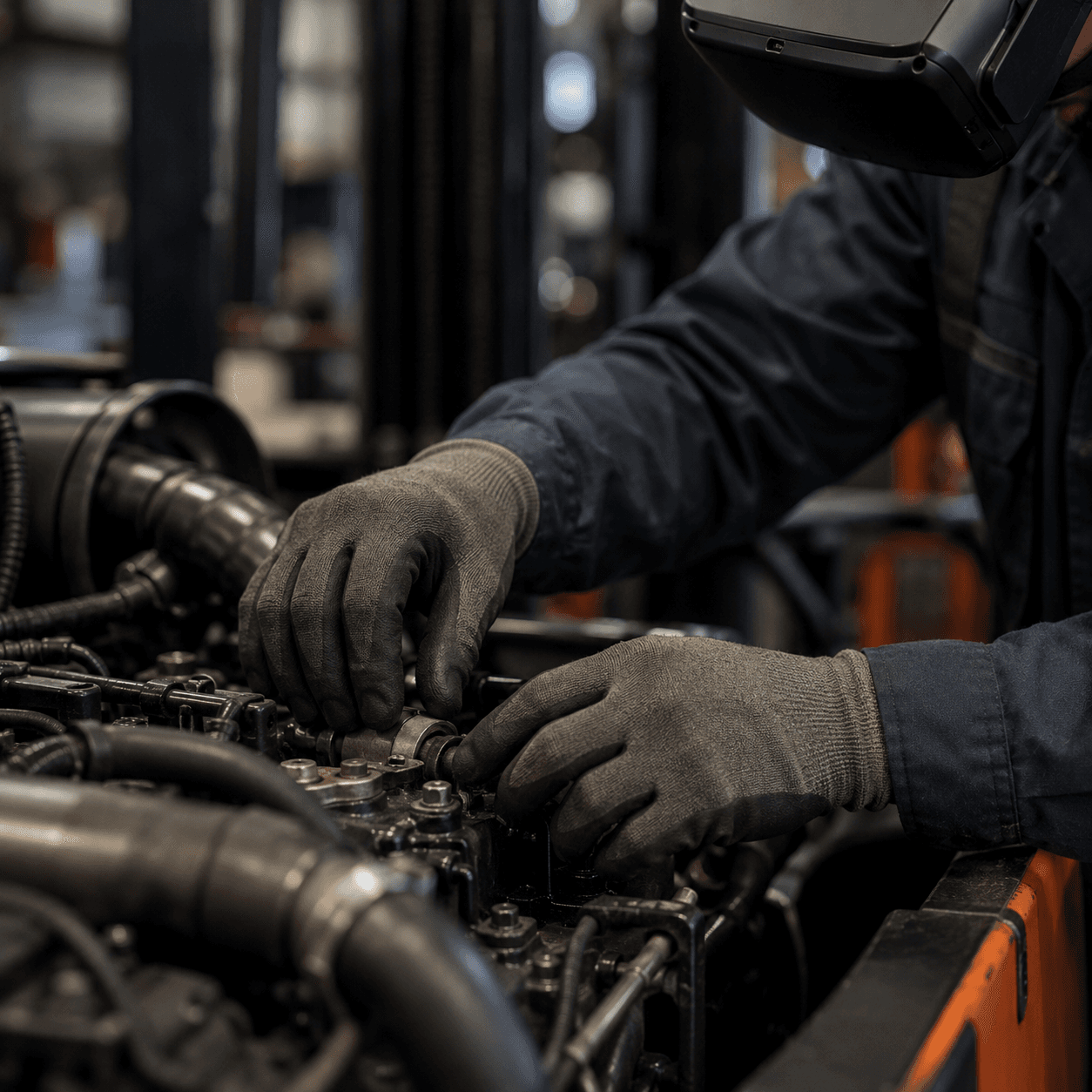
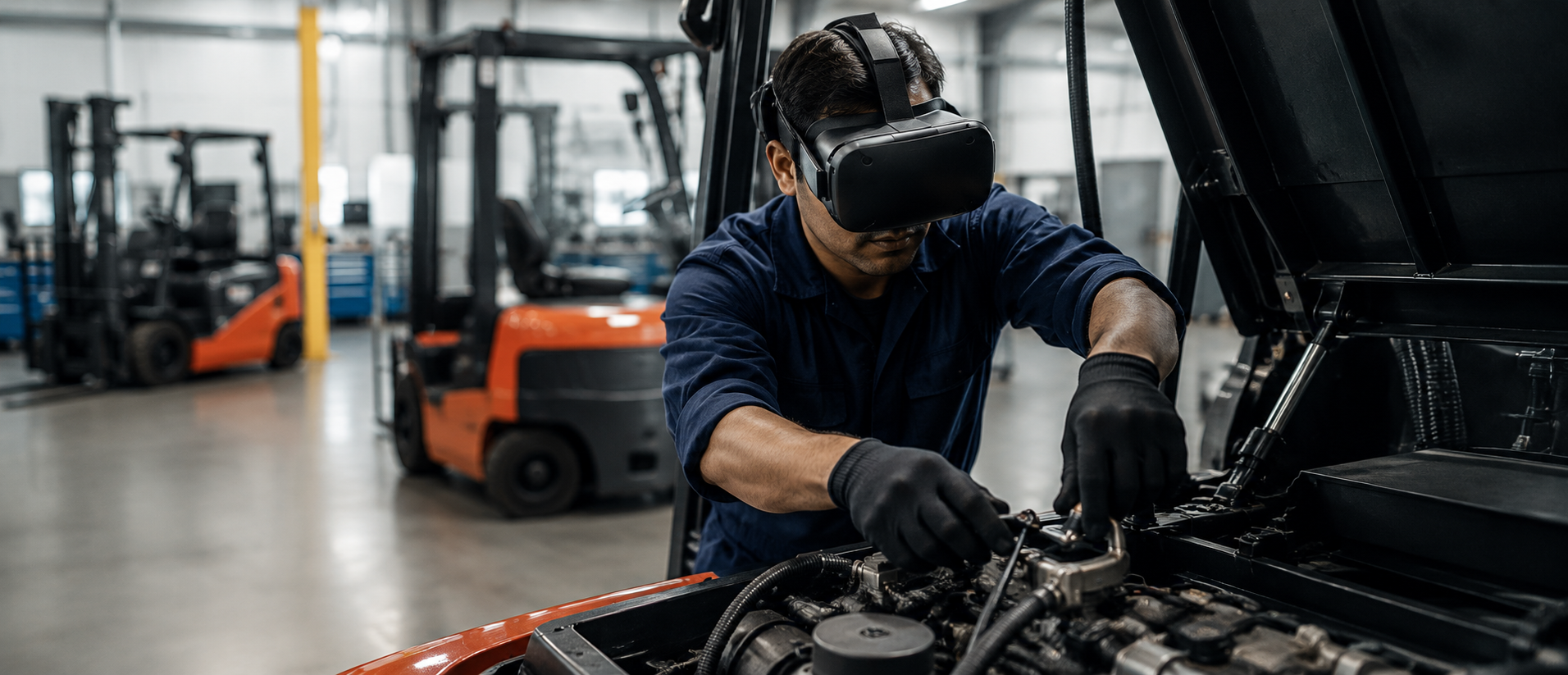
Toyota Material Handling, working with VR Vision, trained more than 10,000 employees across 300-plus dealerships, reporting more than $1.5 million in annual savings, because, as UC Today notes, “the system was built around one very specific problem: technician training on complex mechanical systems.”
Toyota Material Handling’s VR training program didn’t succeed because the company bought impressive technology, it succeeded because of a single disciplined decision made before any hardware was purchased, building the entire program around one narrowly defined, genuinely hard problem: technician training on complex mechanical systems, and this blog breaks down why that specific discipline is the real lesson behind a $1.5 million annual savings result across more than 10,000 trained employees. It opens by explaining the strategic principle this case study demonstrates, that there isn’t one “best” XR device or approach, there’s only the one that fits a specific problem, with VR fitting rehearsal, onboarding, and high-risk training specifically, a distinction Toyota’s team applied with genuine discipline rather than treating XR as a general-purpose training upgrade to apply broadly. The piece walks through why technician training on complex mechanical systems specifically qualified as the right starting problem, since it involves exactly the characteristics that make a use case genuinely worth the behavior change VR demands, hands-on procedural complexity, meaningful consequences for getting it wrong, and a scale of deployment, over 300 dealerships, where consistent, high-quality training delivery through traditional methods was becoming genuinely difficult to sustain. It covers what the 10,000-employee, 300-plus-dealership scale reveals about this program’s design from the start, arguing that a program built to work consistently across that many distributed locations required genuine discipline in defining a repeatable, well-scoped training module rather than a bespoke, one-off training experience that would be difficult to replicate at scale.
A section will address how the $1.5 million annual savings figure should be read in context, not as a generic VR training benefit but as the specific, measurable result of correctly matching a well-defined problem to the right technology and executing it at genuine scale, reinforcing why the problem-first, technology-second approach matters so much more than technology capability alone. The blog also touches on what other manufacturers and equipment-heavy businesses should take directly from this case, arguing that the same discipline, starting from one specific, well-defined technician training problem rather than a broad “let’s do VR training” initiative, is directly replicable regardless of industry, as long as the underlying problem shares Toyota’s core characteristics of genuine complexity and real consequence for error. VR technician training ROI, disciplined XR use case selection, and scaled enterprise deployment are the throughlines here, using a verified, large-scale case study to reinforce the single decision that made it succeed.