

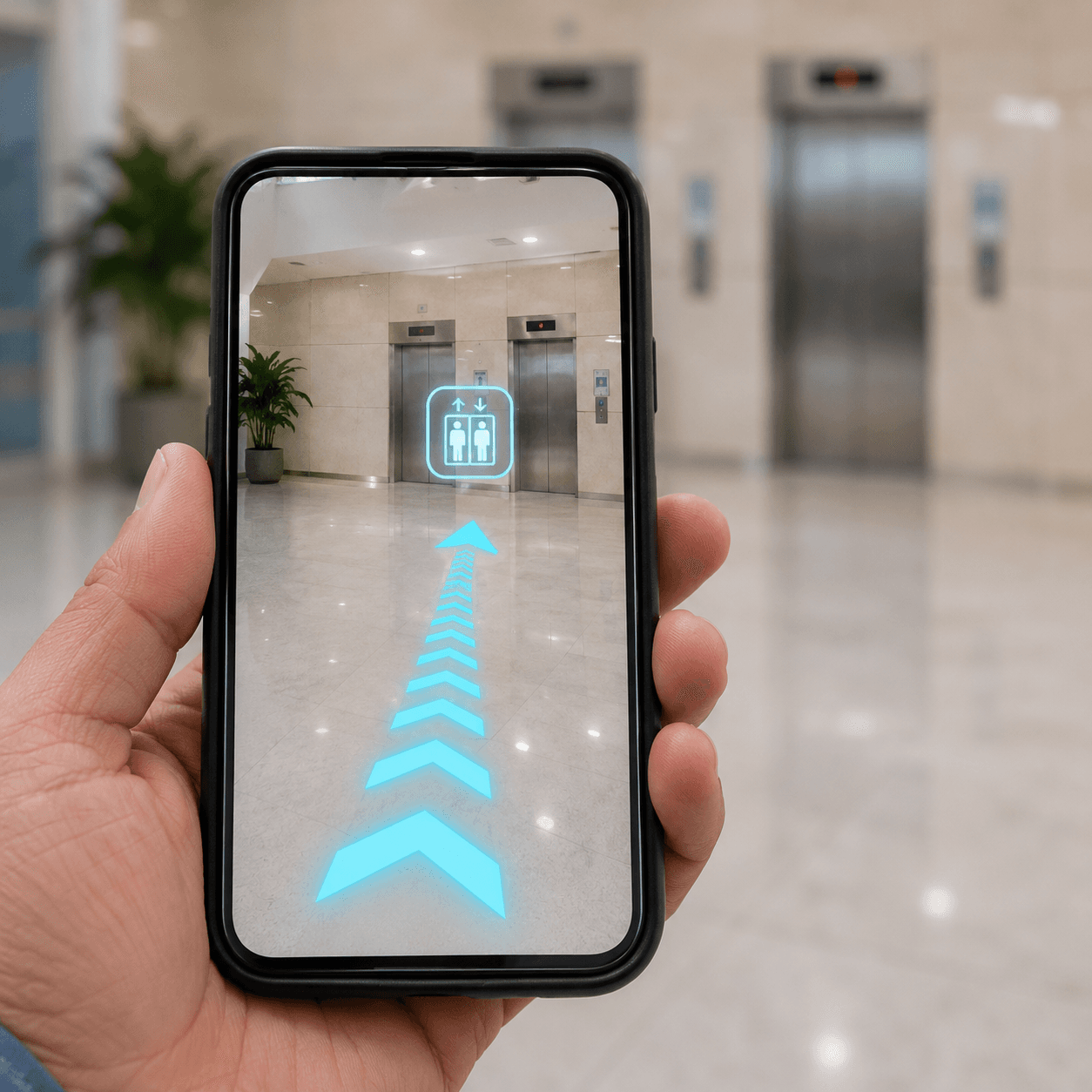
Zappar’s major Spaces update rebuilds its indoor navigation and wayfinding platform to meet WCAG 2.1 AA accessibility guidelines, adds an opt-in Accessible QR scanning feature to identify and locate movable equipment, and reworks route calculation so that “stairs now carry more effort than flat ground” and elevators carry a fixed boarding penalty roughly equivalent to a 20-second wait.

Most indoor navigation apps calculate the shortest physical distance between two points, but Zappar’s rebuilt Spaces platform does something more sophisticated, calculating routes based on actual physical effort rather than raw distance, treating stairs as more costly than flat ground and giving elevators a built-in time penalty, a genuinely thoughtful design choice that reveals how much real accessibility work goes into navigation software most users never think twice about. This blog breaks down what this update actually changes, and why it matters for any business operating a large facility, hospital, airport, warehouse, or campus. It opens by explaining the core design shift this update represents, moving from pure distance-based routing toward effort-based routing, where the platform now calculates that the fastest route on paper isn’t always the best route for a real person to actually walk, particularly when stairs are involved and a flat, slightly longer path exists as an alternative. The piece walks through the specific accessibility features this rebuild adds, including full compliance with WCAG 2.1 AA guidelines covering color contrast, keyboard navigation, screen reader support, and visible focus states, applied consistently across both the visitor-facing app and the editor tool facility managers use to build out their space, ensuring accessibility isn’t limited to the public-facing experience alone. It covers what the new Accessible QR scanning feature specifically enables, letting a visitor scan a code on a movable item like a piece of equipment to either identify it immediately or be guided directly to its current location, a genuinely practical solution for large facilities where equipment doesn’t always stay in a fixed spot.
A section will address why this update matters specifically for hospitals, airports, warehouses, and large campuses, since these environments combine high visitor complexity with a genuine mix of mobility needs, sighted, low-vision, blind, and mobility-impaired users all navigating the same physical space, making thoughtful, effort-aware routing a genuine operational and accessibility necessity rather than a nice-to-have feature. The blog also touches on the enterprise deployment context this platform is built for, noting it supports secure internal deployments with ISO 27001 certification and SSO-enabled access controls, positioning it for genuinely sensitive environments beyond public-facing wayfinding alone. Accessible indoor navigation, effort-based wayfinding, and enterprise AR facility guidance are the throughlines here, breaking down a platform update into genuinely thoughtful accessibility engineering worth understanding for any large-facility operator.