

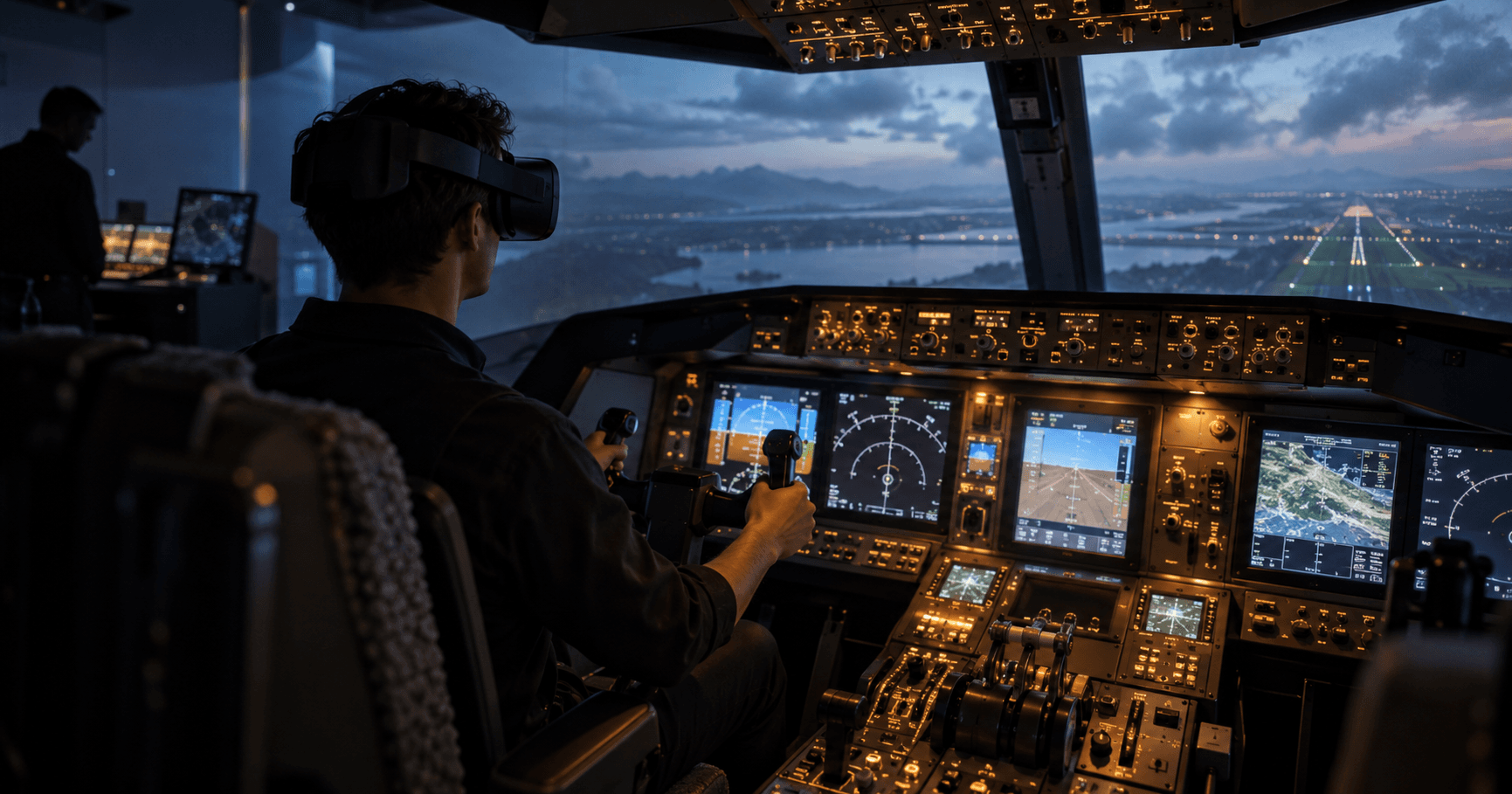
On October 20, TRU Simulation + Training, a Textron company, introduced the Cessna Grand Caravan EX Veris, a virtual reality flight training device built around one of the world’s most widely flown utility aircraft. The announcement came from Las Vegas, where the NBAA-BACE business aviation show opened the same day, and it is the first Caravan-configured device in TRU Simulation’s portfolio. The device pairs VR with a fully built physical cockpit that replicates the Caravan’s instruments, controls and Garmin G1000 NXi avionics. That combination matters. Pilots see a fully immersive world through the headset, but their hands still find real switches, yokes and screens where they would be in the aircraft. The dual-seat layout supports both single-pilot and multi-crew training, and the device can be used with or without the headset, so instructors can match the setup to the lesson and the learner.
It joins a growing Veris line-up that already covers the Bell 505, Cessna Skyhawk and Airbus H125. TRU Simulation’s CEO Jerry Messaris said the platform was created to make high-fidelity simulation accessible to more operators and training organisations, pointing to the Caravan’s wide range of missions, from cargo and commuter flights to special mission and utility work. For anyone planning immersive training, three takeaways stand out. First, VR is becoming purpose-built training equipment in one of the most safety-critical industries there is, with earlier Veris devices already qualified by the FAA. Second, the strongest results come from blending virtual and physical: immersive visuals for situational awareness, real controls for muscle memory. Third, flexibility drives adoption. A system that works with or without a headset lowers the barrier for trainees and instructors who are new to VR.
The same principles apply well beyond the cockpit. Manufacturing lines, oil and gas facilities, hospitals and warehouses all have procedures that are expensive, risky or impossible to rehearse for real. A focused simulator that mirrors the actual equipment, paired with VR where it adds value, can shorten onboarding and reduce errors without the cost of full-scale physical training rigs. At PointZero Immersive Lab, aviation and aerospace is one of the sectors we serve, and this is the approach we take across all of them: start with the task people need to master, then design the right mix of virtual and physical to train it safely, repeatedly and measurably.