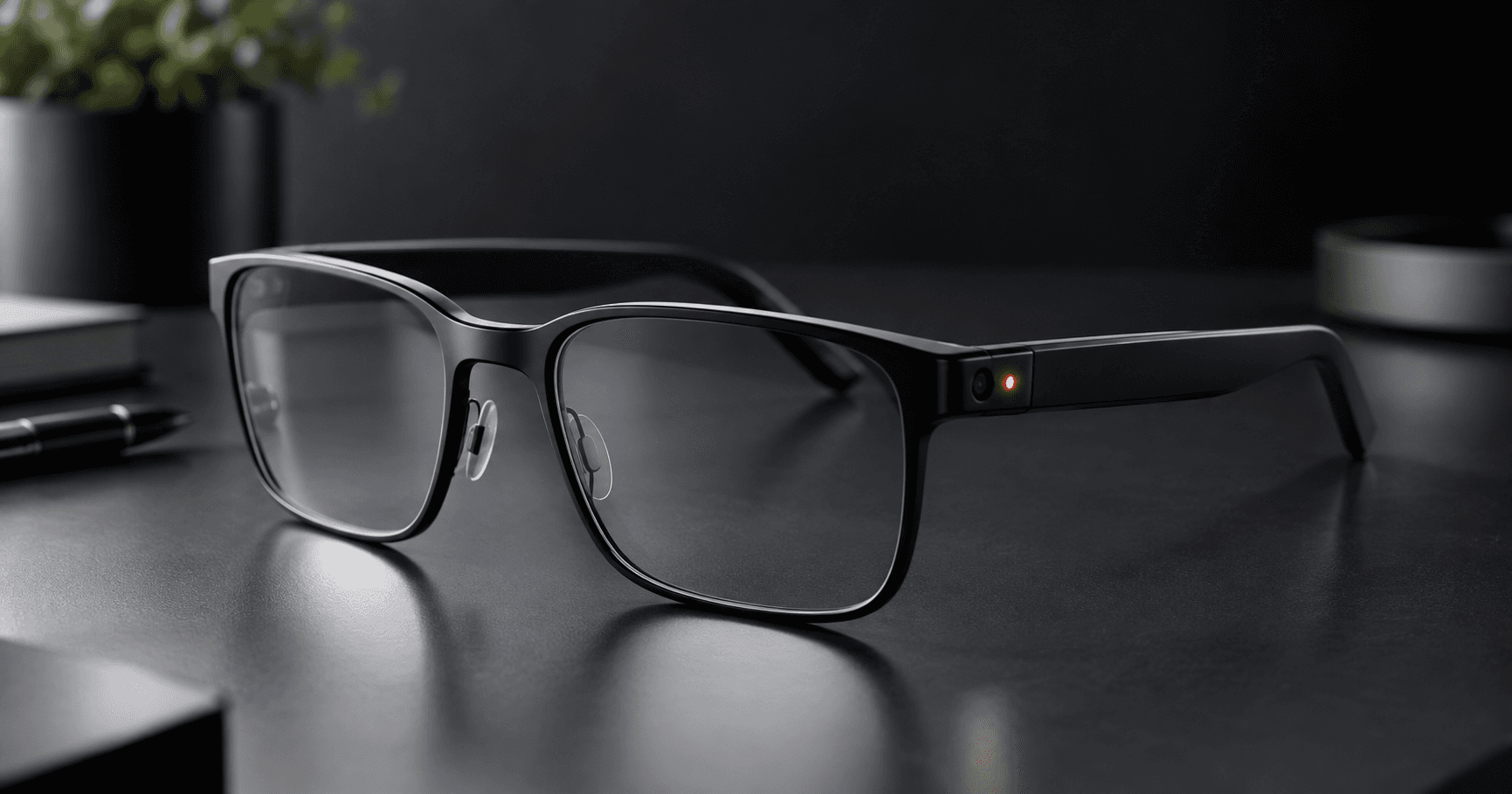

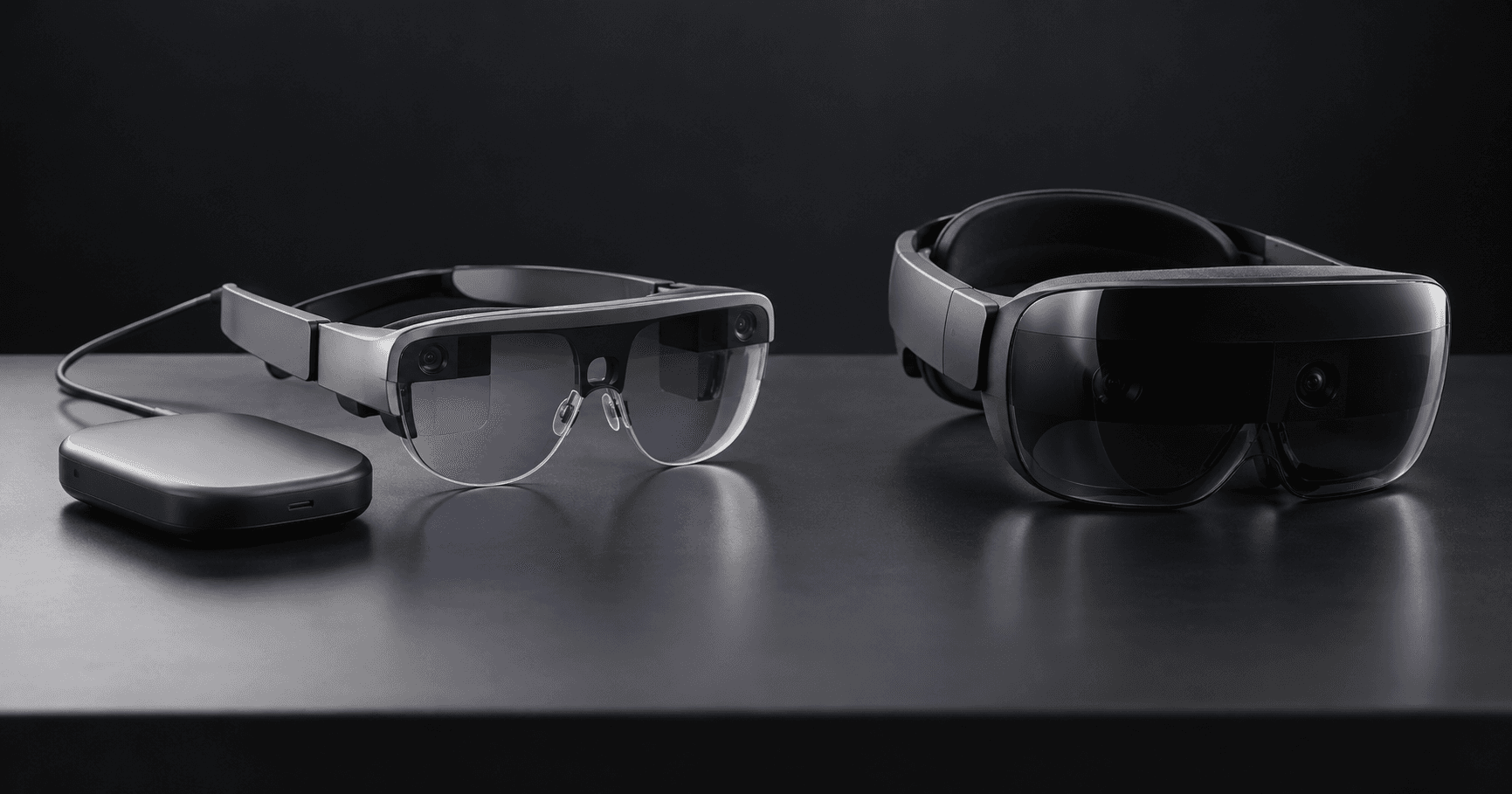
XREAL has confirmed pricing for its long-teased AURA glasses: $1,279 for the base configuration, according to Next Reality’s reporting, landing roughly $20 below Meta’s $1,299.99 VR Glasses. A $20 gap on a $1,300 device isn’t meant to win on price alone, it’s a positioning signal. When two competing devices land within $20 of each other, the purchase decision stops being about cost and becomes entirely about which design tradeoffs actually fit the job. Meta’s VR Glasses is a roughly 100-gram, hands-first device tethered to a pocket compute puck with no controllers in the box, built around full immersion. AURA runs on Android XR with a different hardware philosophy entirely. Pricing them this close together means a buyer genuinely has to evaluate field of view, controller support, software ecosystem, and comfort for the actual task at hand, rather than letting price make the decision by default.
For any business currently scoping an AR or VR glasses pilot, this is the moment to build a real side-by-side comparison rather than picking a platform on name recognition. Worth testing both devices against the specific scenario planned, a design review session, a training module, a field guidance workflow, and comparing them on the details that actually affect daily use: field of view for the content being shown, whether hands-only interaction or controller precision fits the task better, and how the SDK and existing content pipeline line up with each platform. With pricing now this close, the decision genuinely comes down to fit rather than budget, which is a healthier place for a buyer to be than choosing based on whichever headset happened to launch first or cost less. It is also a good moment to pressure-test any content already built for one ecosystem, since a near-identical price point means switching platforms later is a live option, not a hypothetical one.