

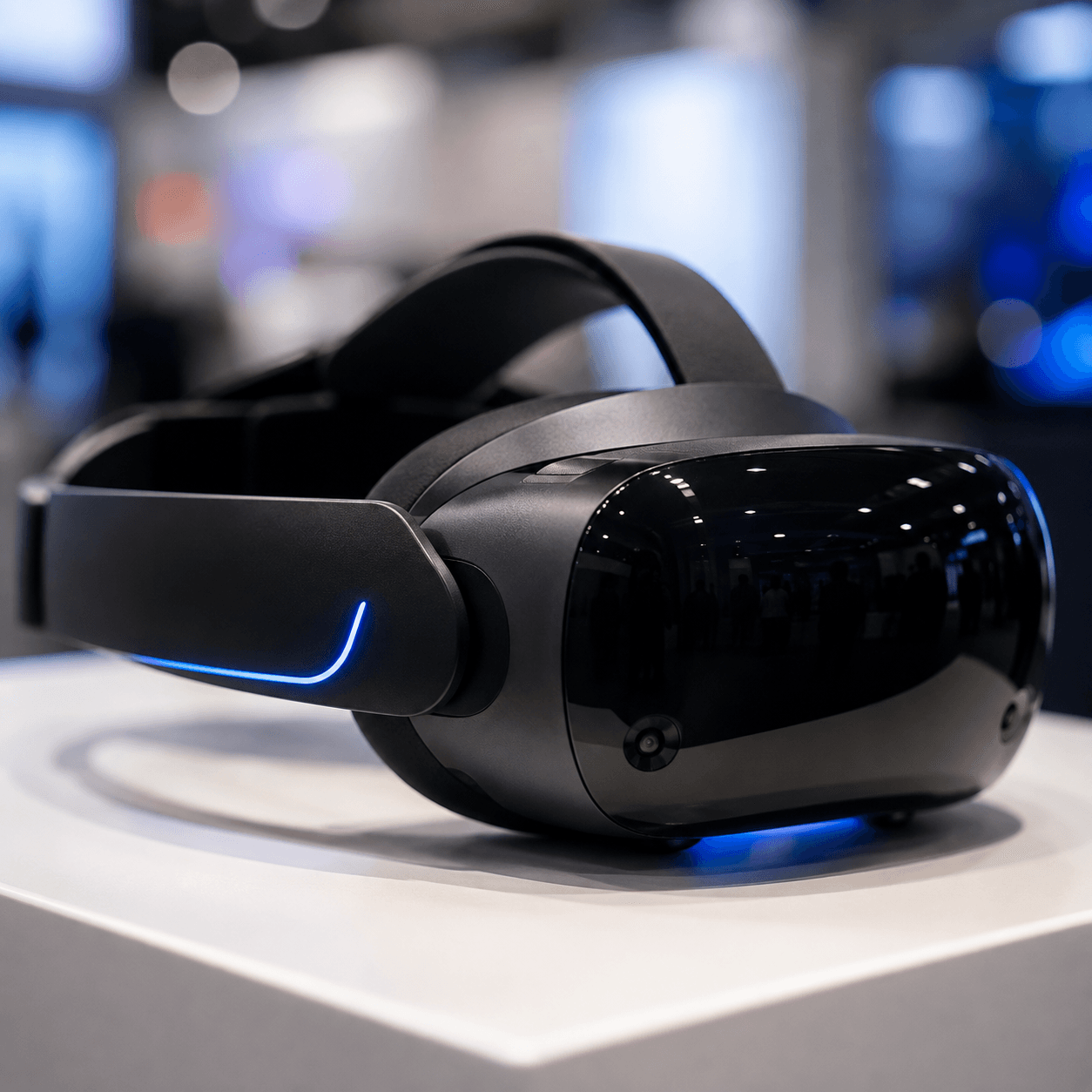
Published today, July 30, 2026, a hands-on report from AWE details Canon’s MREAL X1 enterprise mixed-reality headset, priced around $20,000 for the headset, PC, and connection box. The review found a 1920×2160 per-eye resolution (lower than a Quest 3), a 58° horizontal field of view, unstable tracking, and motion blur, concluding the reviewer now gets “a better experience at home with my PC and a Quest 3.”
A $20,000 price tag creates an expectation, and when a hands-on reviewer at AWE walked away from Canon’s MREAL X1 concluding they get a better experience from a $500 consumer headset at home, that gap between price and performance is worth examining closely for any business currently evaluating enterprise VR hardware. This blog uses that specific, detailed hands-on account to explore a genuinely important lesson about enterprise hardware pricing that has nothing to do with brand reputation and everything to do with actual specifications. It opens by laying out the specific numbers, a 1920×2160 per-eye resolution that’s actually lower than Meta’s consumer-grade Quest 3, and a 58-degree horizontal field of view, well below what reviewers consider the minimum usability threshold, alongside reported tracking instability and motion blur during use. The piece walks through why this matters so much as a case study, since Canon is not a small, unproven company but an established, respected optics manufacturer, meaning this isn’t a story about an inexperienced hardware maker cutting corners, it’s a story about how even a legacy device launched years earlier can fall dramatically behind a fast-moving market if it isn’t meaningfully updated. It covers the direct comparison the reviewer made to a competing device, Varjo’s XR-4 Focal Edition, sitting in a similar price range but offering roughly double the resolution and a meaningfully wider field of view, demonstrating that high enterprise pricing alone guarantees nothing about actual performance without a direct spec comparison against current alternatives.
A section will address the practical lesson this holds for any business evaluating premium enterprise XR hardware, arguing that price and brand reputation are not reliable proxies for actual capability, and that current-generation specifications, resolution, field of view, tracking stability, need to be checked against the latest available alternatives regardless of a vendor’s legacy reputation or headline price point. The blog also touches on the more interesting side of Canon’s AWE showing, a small, marker-based mixed reality prototype with no positional tracking, purpose-built for brief, walk-up museum and exhibition installations rather than sustained professional use, illustrating that Canon’s more genuinely promising direction may lie in narrow, purpose-built devices rather than premium general-purpose headsets. Enterprise VR hardware evaluation, headset spec comparison, and XR procurement due diligence are the throughlines here, using a candid hands-on review to reinforce why every enterprise VR purchase decision needs a genuine spec-by-spec comparison against current alternatives, not just trust in price or brand name.