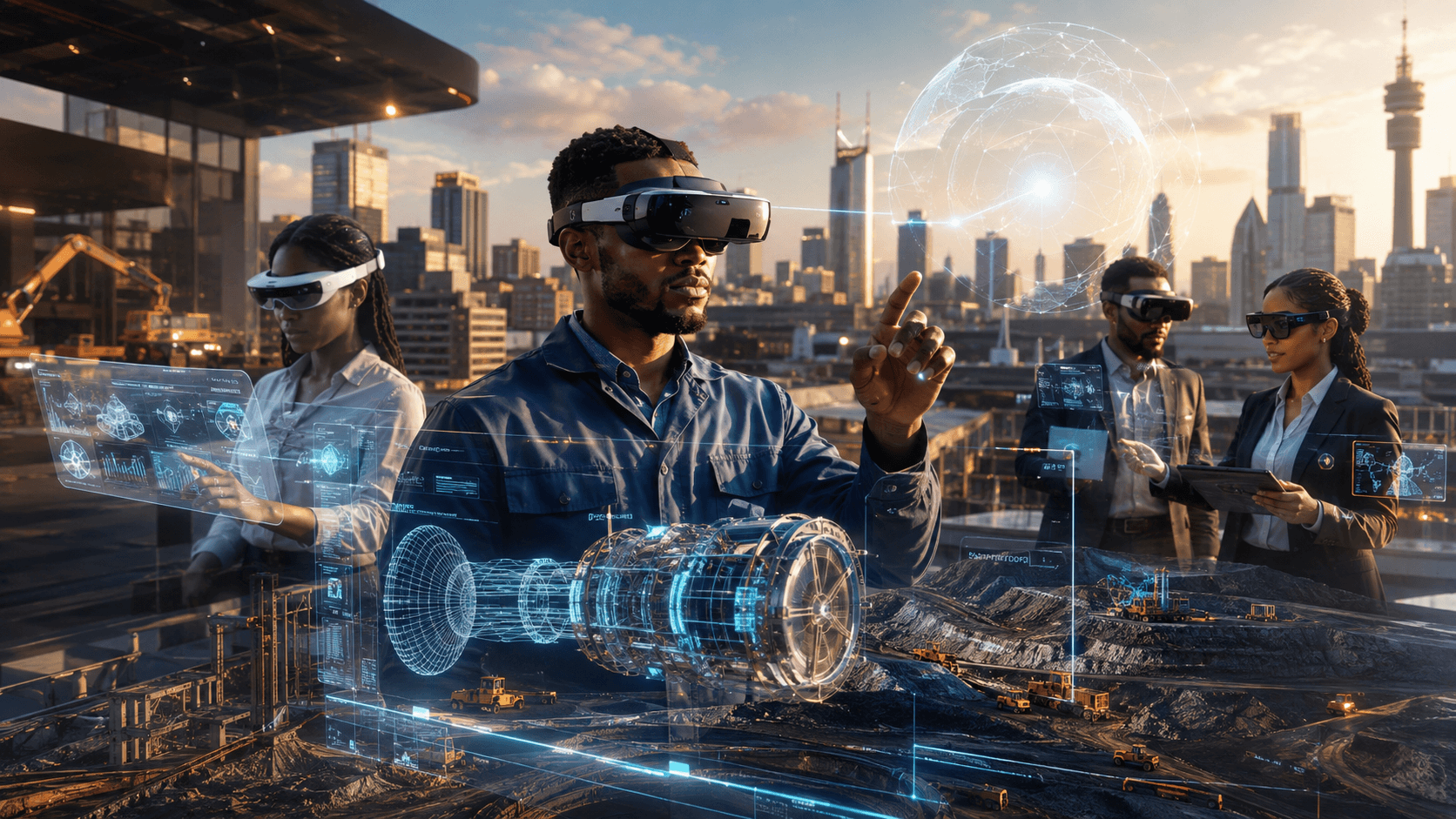

Virtual Reality (VR) is rapidly evolving from a technology primarily associated with gaming into a powerful platform for enterprise training, healthcare, manufacturing, education, defense, entertainment, and immersive collaboration. According to Market Research Future, the global Virtual Reality market was valued at approximately USD 14.18 billion in 2025 and is projected to grow from USD 16.90 billion in 2026 to USD 82.12 billion by 2035, representing a strong 19.2% CAGR. This growth is being supported by increasing enterprise investment in immersive training, declining headset prices, improvements in standalone devices, and the expansion of digital infrastructure. Enterprise workforce training is becoming one of the most important applications, allowing organizations to create realistic simulations for workplace safety, equipment operation, emergency response, and professional skills development without requiring employees to enter potentially hazardous environments. At the same time, gaming and interactive entertainment continue to represent a major part of the market, with gaming accounting for an estimated 58.9% market share in 2025. The evolution from tethered, PC-dependent headsets toward lightweight standalone head-mounted displays (HMDs) is also changing the market, with standalone HMDs projected to grow at approximately 24.0% CAGR through 2035. The growing deployment of 5G and edge computing is further enabling lower-latency, cloud-rendered VR experiences, while advances in display technology, onboard processing, spatial tracking, and optics are making VR devices increasingly powerful and accessible.
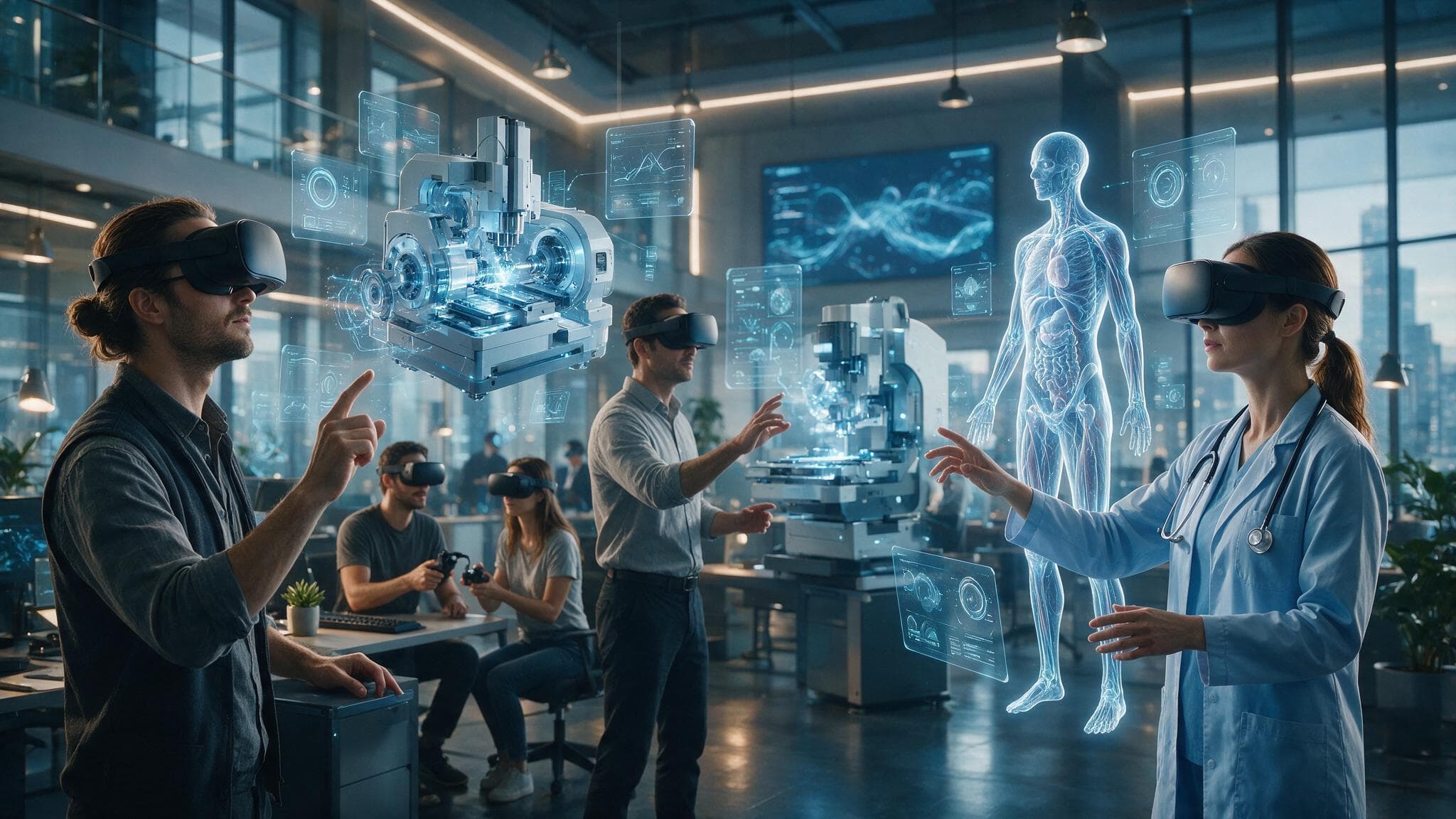
Beyond entertainment, the next major phase of VR growth is expected to come from the convergence of Artificial Intelligence (AI), spatial computing, mixed reality, cloud computing, and immersive digital environments. Healthcare is emerging as one of the fastest-growing applications, with the sector projected to expand at approximately 26.1% CAGR through 2035, driven by surgical simulation, medical education, rehabilitation, and therapeutic applications. Manufacturing and industrial organizations can use VR for digital twins, product visualization, factory planning, equipment simulation, employee training, and remote collaboration, while retailers can introduce virtual try-on and immersive shopping experiences. The emergence of VR-as-a-Service and subscription-based models is also making adoption easier by combining hardware, software, content, analytics, and technical support into managed solutions. Looking ahead, AI-powered immersive experiences could enable virtual environments, training scenarios, and digital assets to be generated and personalized more efficiently, reducing the cost and complexity of developing customized VR applications. The market is also moving toward a broader VR + AR + Mixed Reality ecosystem, creating new possibilities across architecture, engineering, education, healthcare, field service, defense, and professional collaboration. Although challenges such as high hardware costs, motion sickness, limited enterprise content, privacy concerns, and hardware fragmentation remain, continued advances in lightweight optics, AI, 5G, and spatial computing are expected to address many of these limitations. With the global market forecast to reach USD 82.12 billion by 2035, Virtual Reality is increasingly positioned not simply as an entertainment technology, but as an important part of the next generation of digital transformation and immersive computing.