

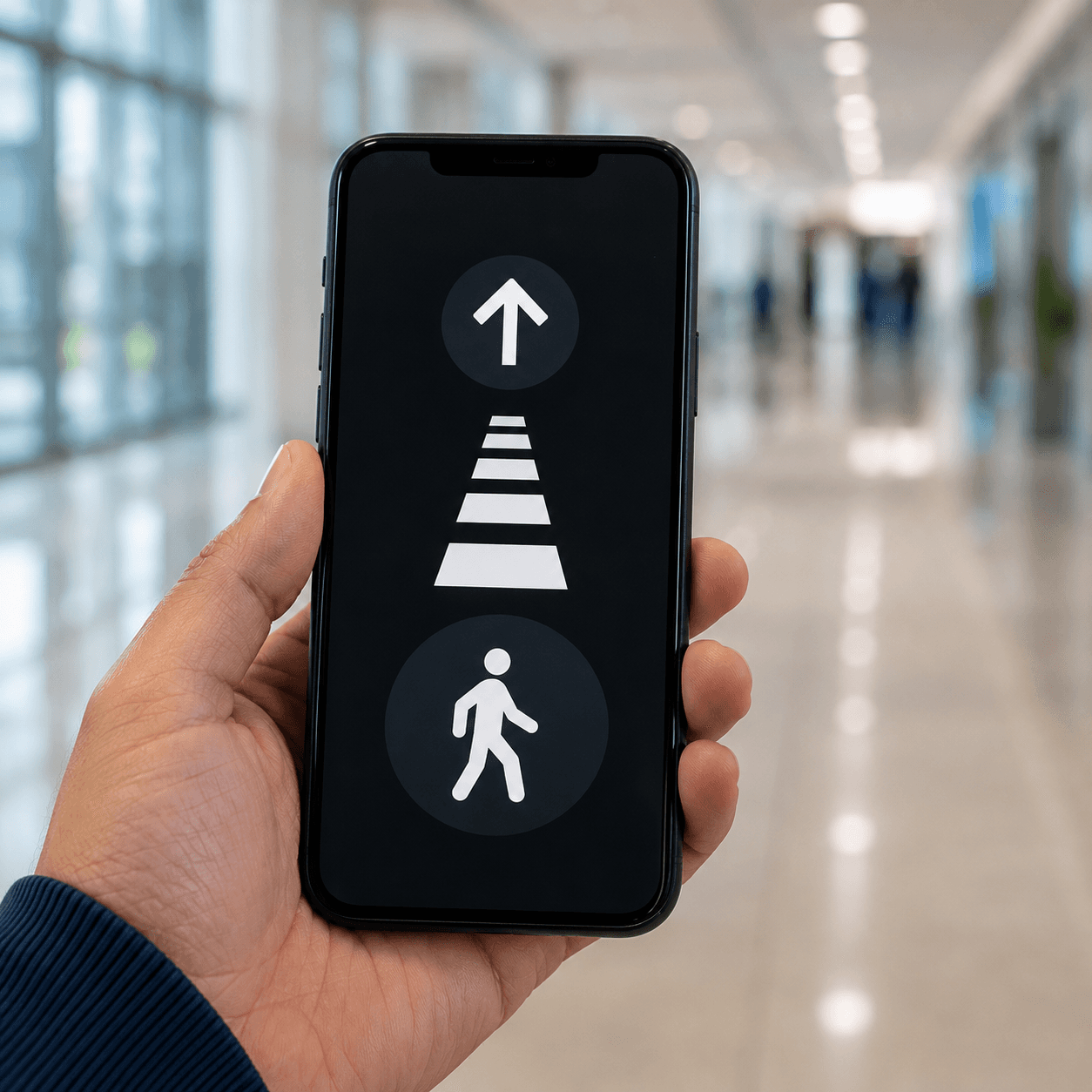
Under a 2026 U.S. Department of Justice deadline, all public entities, including state-funded universities, municipal transport hubs, and government offices, must ensure their mobile apps and web services fully conform to WCAG 2.1 Level AA standards by April 24, 2026, with the regulation explicitly specifying that “digital content” includes navigation services provided within public facilities.

A regulatory deadline that specifically names indoor navigation services as covered digital content changes the conversation around accessible wayfinding technology from a genuinely good idea into a compliance requirement with real legal exposure attached, and this blog breaks down exactly what the April 24, 2026 Department of Justice deadline requires, and why public entities still relying on inaccessible indoor navigation systems now face genuine legal risk, not just a missed opportunity to improve visitor experience. It opens by explaining the specific scope this regulation covers, applying to state-funded universities, municipal transport hubs, and government offices, requiring their mobile apps and web services to fully conform to WCAG 2.1 Level AA standards, a formal accessibility benchmark covering everything from color contrast to screen reader compatibility. The piece walks through why the explicit inclusion of navigation services within public facilities as covered digital content matters so significantly, since this closes a genuine ambiguity that previously let some organizations treat indoor wayfinding apps as outside the scope of digital accessibility law, an interpretation this regulation directly forecloses going forward. It covers what genuine WCAG 2.1 AA compliance actually requires for an indoor navigation system specifically, including reliable, consistent screen reader support, keyboard navigation throughout, and appropriately structured content, technical requirements that go considerably beyond simply having an accessibility feature checkbox somewhere in the app.
A section will address the practical risk this creates for public entities that haven’t yet audited their current indoor navigation capabilities, arguing that the time to conduct that audit is now, before the deadline arrives, rather than after facing a compliance complaint or legal challenge, since retrofitting an inaccessible system under regulatory pressure tends to be considerably more expensive and rushed than proactive planning. The blog also touches on the broader universal design principle this regulation reinforces, that accurate, reliable indoor positioning technology, avoiding the “blue dot” jumping between floors that undermines trust for users who depend on the app to find the correct location, is a technical requirement, not a nice-to-have polish item, for any navigation system serious about genuine accessibility compliance. ADA and WCAG compliance deadlines, accessible indoor navigation requirements, and public sector digital accessibility law are the throughlines here, translating a regulatory deadline into a genuinely urgent planning item for any public entity operating a physical facility.