
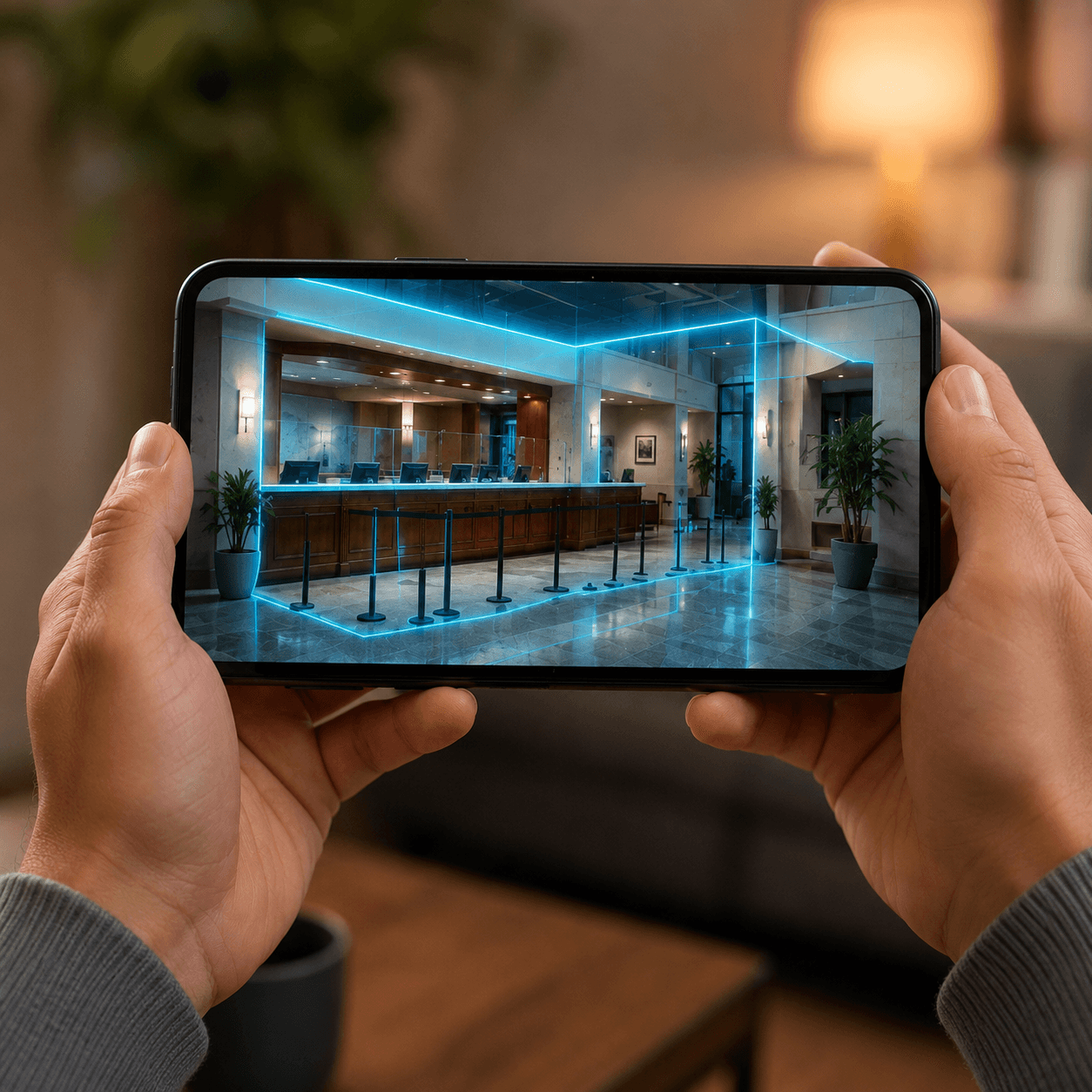
BNP Paribas launched a VR application that allowed customers to interact with a virtual bank, letting them check balances, learn about new products, and receive consultations from home, while the bank’s real estate division separately partnered with Vectuel and RF Studio to build a VR capsule letting potential buyers “move” through properties still under construction, part of a broader pattern where replacing physical branches with AR/VR banking experiences helps institutions reduce operational costs while maintaining a seamless customer experience.
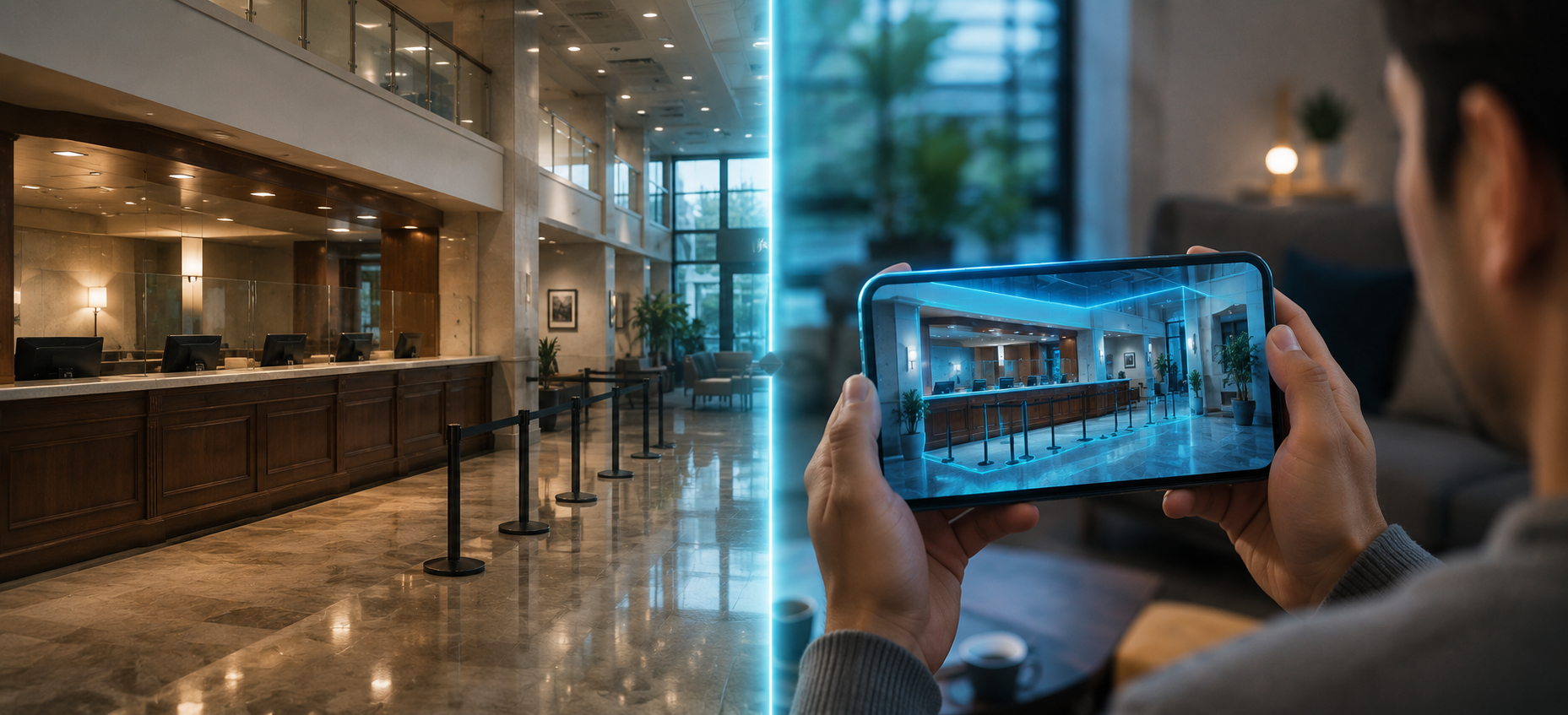
A bank branch exists to do a handful of specific things, let customers check their finances, learn about products, and get advice from a real person, and BNP Paribas’s virtual bank project set out to prove that all three of those functions could work through VR just as effectively as a physical location, at a fraction of the real estate and staffing cost. This blog breaks down exactly what that virtual bank experience lets customers actually do, and what it reveals about where AR and VR are genuinely reshaping financial services beyond training applications alone. It opens by explaining the specific functions BNP Paribas built into its virtual bank, letting customers check account balances, learn about new financial products, and receive live consultations, all from home, effectively recreating the core value of an in-person branch visit without requiring the customer or the bank to maintain that physical space. The piece walks through why this matters so much for the underlying banking business model, since physical branch networks represent a massive, largely fixed real estate and staffing cost that traditional banks have historically had to maintain regardless of actual foot traffic, meaning a genuinely capable virtual alternative directly attacks one of banking’s largest structural cost categories. It covers the separate but related real estate application, the VR capsule letting potential buyers virtually walk through properties still under construction, built through a partnership between BNP Paribas’s real estate division and specialized studios Vectuel and RF Studio, demonstrating how the same underlying immersive technology extends naturally from core banking services into adjacent business lines like property financing and investment.
A section will address why this kind of customer-facing AR and VR investment matters specifically for reaching younger customers, since millennials and younger generations, having grown up in a technology-driven environment, increasingly expect the same kind of interactive, digital-first experience from their bank that they get everywhere else, making this less an experimental feature and more a genuine competitive necessity for institutions trying to retain and attract that demographic. The blog also touches on the broader direction this points toward for financial services, referencing how AR is expected to enable immersive 3D data visualization for complex financial information, turning investment performance and portfolio data into something customers can genuinely explore and understand rather than parse from a static report. Virtual banking experiences, AR in financial services, and customer-facing immersive banking are the throughlines here, using a concrete, built example to show how AR and VR are reshaping banking beyond the training use cases most coverage focuses on.