
Among more than 50 commercial AR/VR use cases tracked by IDC, emergency response is forecast to see the fastest spending growth of any single application, at an 82.9% compound annual growth rate, ahead of augmented reality games at 57.8% and internal videography at 47.8%.
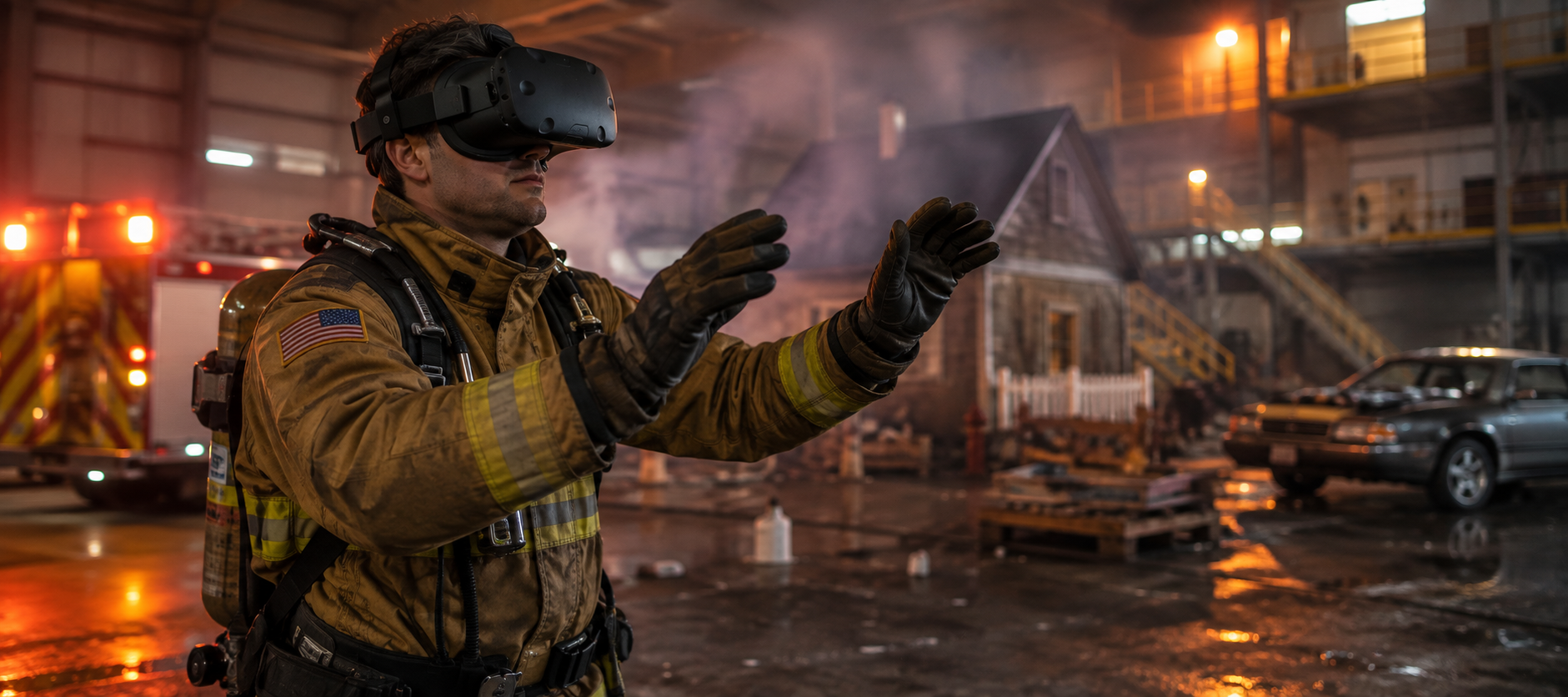
Out of dozens of tracked commercial AR and VR applications spanning every major industry, emergency response spending is forecast to grow faster than any other single use case, outpacing even AR gaming, and this blog explores why public safety and emergency management agencies are investing in this technology at a pace that outstrips nearly every other sector combined. It opens by explaining the specific operational problem driving this growth, that emergency response scenarios by definition involve conditions too dangerous, unpredictable, or logistically complex to rehearse at full scale through traditional training methods, leaving responders with meaningfully less hands-on practice for the exact high-stakes situations where experience matters most. The piece walks through what AR and VR specifically add to emergency response capability, covering immersive disaster simulation training that lets responders rehearse mass casualty scenarios, hazardous material incidents, and complex multi-agency coordination repeatedly without real-world risk, alongside live AR applications that give first responders real-time information overlays during actual incidents, building layouts, hazard locations, and resource positioning visible directly in their field of view during a genuine emergency. It covers why this growth rate specifically outpaces even AR gaming, a category most people would assume drives faster spending given its large consumer base, arguing that government and public safety budgets, once convinced of a technology’s genuine life-safety value, tend to commit sustained, serious funding rather than the more volatile, trend-sensitive spending patterns typical of consumer entertainment categories.
A section will address what this growth signals for adjacent industries with similar high-stakes, hard-to-rehearse scenarios, including oil and gas, aviation, and industrial safety training, arguing that emergency response’s leading growth rate validates the same underlying training logic these other high-risk sectors are also applying, rehearsing dangerous, rare scenarios repeatedly in simulation before ever facing them in reality. The blog also touches on the dual nature of this investment category, spanning both pre-incident training simulation and real-time, in-the-moment AR support during actual emergencies, representing two distinct but complementary applications that together explain why this category is pulling ahead of nearly every other tracked use case. Emergency response AR/VR investment, public safety training simulation, and government immersive technology spending are the throughlines here, using the fastest-growing use case in the entire AR/VR spending forecast to make a broader case for high-stakes scenario training.