
On October 24, Moonshot AI released Kimi K3.1 Pro, and by October 25 its new 3D Make feature was being covered by XR news outlets. 3D Make turns a text prompt into a 3D model that users can preview and edit online, download for 3D printing, or export as video. Behind it, Moonshot says the model can write and run scripts for Blender and CAD tools, modify individual components, adjust geometry and materials, and work inside Unity, Unreal Engine, Godot and Three.js.
For anyone building product visualisation, virtual showrooms or training simulations, the key word is “editable.” Here is what that means in practice.
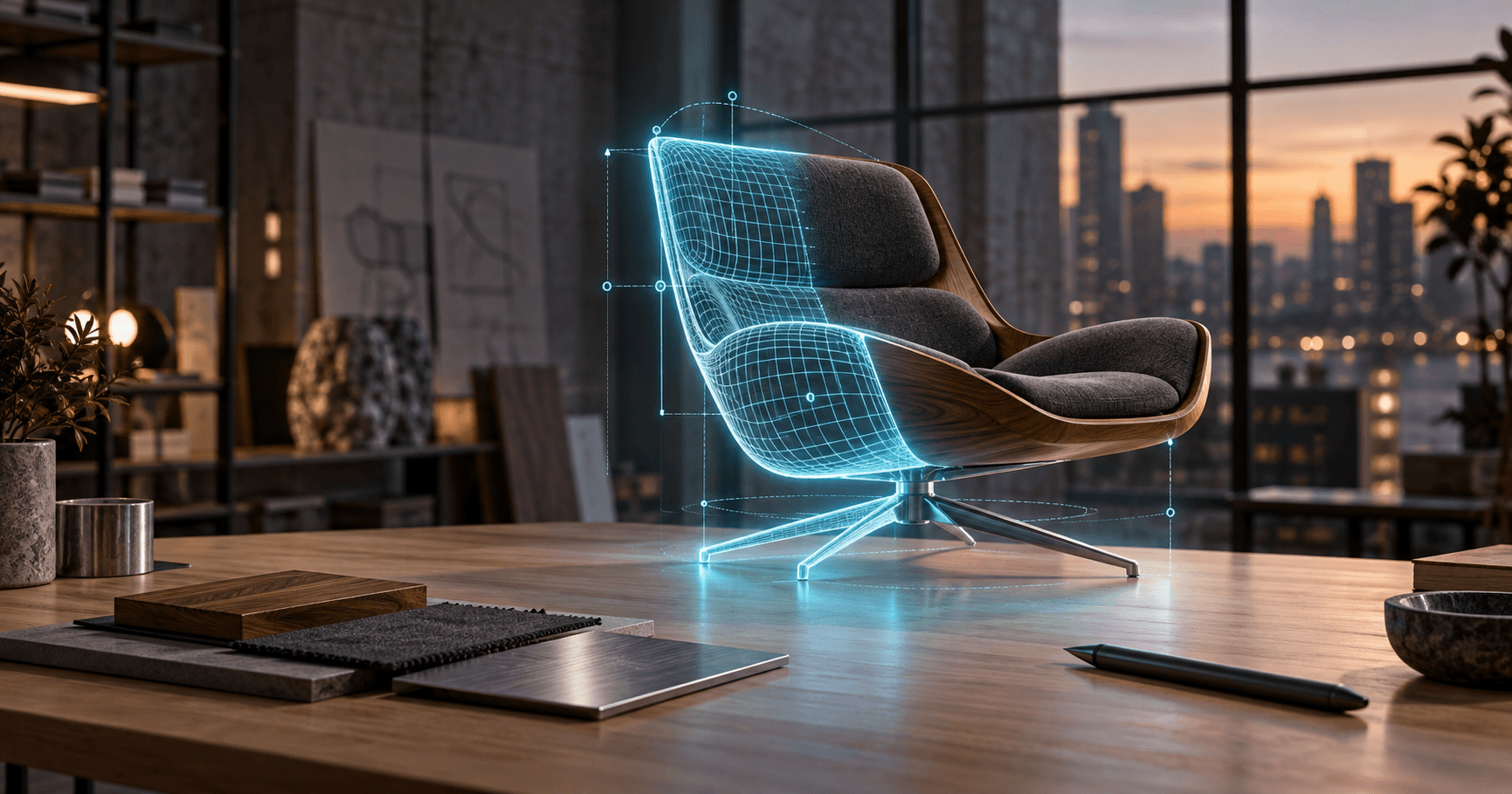
Parametric, not just pretty. Moonshot highlights parametric modelling: mechanical parts, architectural models, custom furniture and products with configurable options. A parametric model is built from rules, so changing a width or a handle style updates the whole object. That is exactly what a 3D product configurator needs.
Scripts you can inspect. When the model builds assets by writing Blender or CAD scripts, the output is a repeatable process rather than a one-off mesh. Teams can review the script, rerun it with new values and keep it in version control.
Strong, but not yet proven in production. On BenchCAD, a test of rebuilding 3D objects from multi-view images through CAD code, Moonshot reports that K3.1 Pro scores 92.7% with tools, a few points behind the leading proprietary models. Independent reviewers note that an attractive render is not the same as a clean, editable scene, and real-world testing is still early.
Where it fits today. AI-generated 3D is well suited to concepting, greyboxing training environments and quickly mocking up product variations for review. It is less suited to final assets, where engineering accuracy, brand-exact materials and headset performance budgets still need expert work. Headset-ready assets also need sensible polygon counts, clean UV maps and textures that load quickly.
Check governance first. Access is currently through Kimi’s own services, with full model weights promised by November 4. Moonshot is a Chinese company, and a US congressional committee has questioned American firms’ use of its models, so review data policies before uploading product designs.
At PointZero Immersive Lab, we test new AI tools against real production needs, combining fast generation with the optimisation and accuracy that enterprise AR, VR and WebXR experiences demand.