
The IAAPA Expo show floor opened in Orlando on November 17, running until November 20, and two virtual reality attractions on show there reveal where location-based VR is heading. Together, they offer useful lessons for any brand planning an immersive activation, showroom or event experience.
Sega’s House of the Dead Reawakened
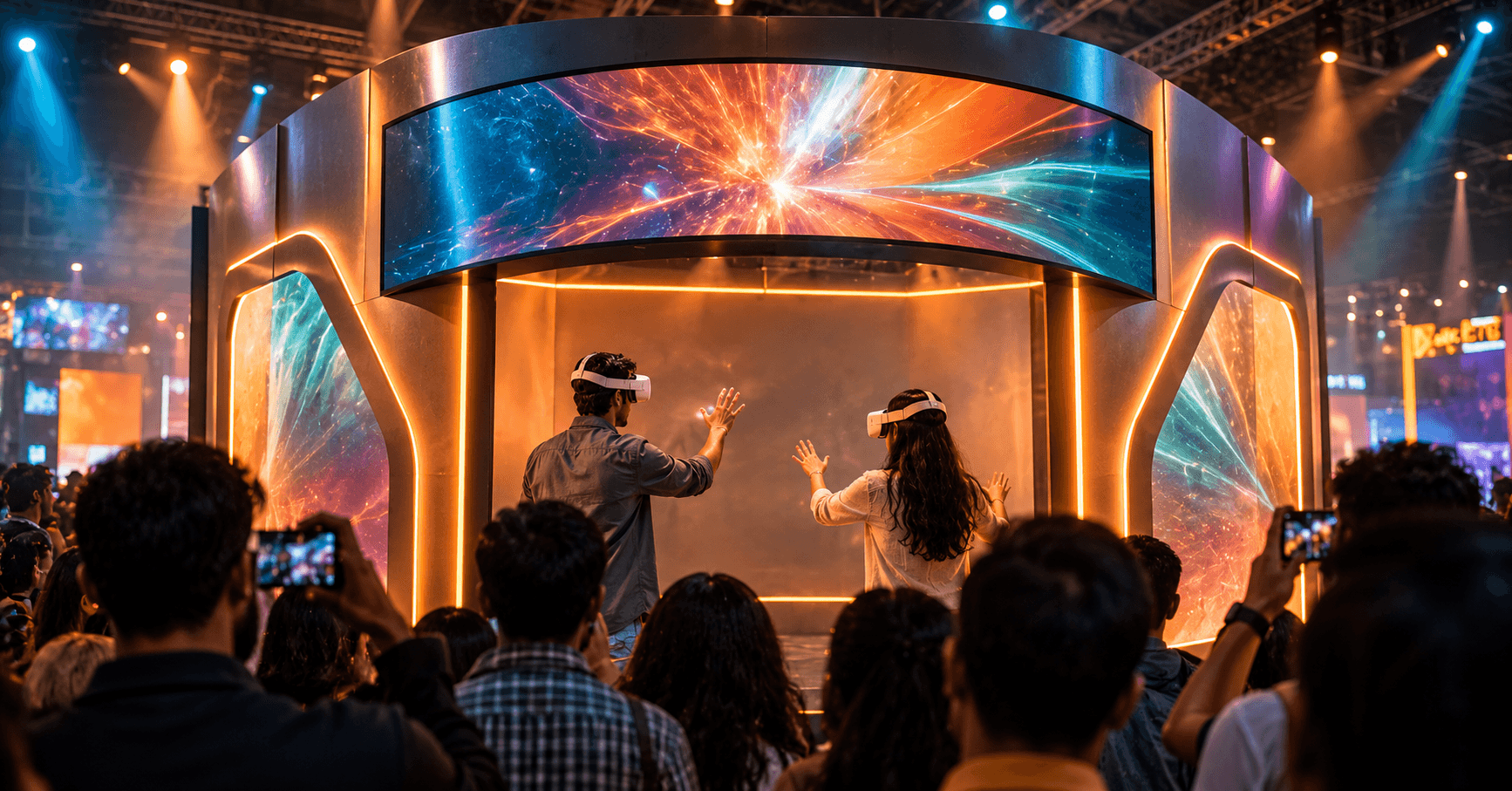
Sega Amusements is bringing its long-running arcade horror series into VR as a two-player attraction that needs no staff to run. The cabinet is built as a gothic manor, with two 43-inch vertical screens as windows and an 85-inch screen as the front door. During play, the windows and door open on screen so onlookers glimpse the horror inside. Sega says the cabinet is designed so the players’ reactions become shareable content. The game runs on Unreal Engine 5 through DPVR’s E4C commercial headset, and because cable damage topped operators’ complaints, the headset and gun controller hang from an armoured cable harness.
Zero Latency’s Jumanji: The Lost Levels
Created with Sony Pictures, this free-roam experience is Zero Latency’s first fully hand-tracked title, with no controllers to learn. At IAAPA it runs in a prefabricated 100-square-metre arena for groups of up to six, and from December 4 it launches at Zero Latency venues worldwide for groups of up to eight, ahead of the next Jumanji film. Zero Latency’s own survey found that 60% of its visitors come with family.
Five design lessons for brand experiences
Design the outside, not just the headset. Spectators are your next players and your social reach. A striking set or screen that reveals what is happening inside turns waiting time into marketing.
Remove every point of friction. Attendant-free operation and hand tracking cut onboarding time, which matters when people have only a few minutes.
Build for groups. Shared experiences are what bring families and colleagues back, and what they talk about afterwards.
Engineer for real-world wear. Cables, controllers and headsets take a beating at public events. Durability is part of the experience design.
Time it with your calendar. Jumanji launches ahead of a film release. Brand experiences work best when tied to a product launch, season or campaign moment.
At PointZero Immersive Lab, we design immersive brand activations, virtual experiences and event installations built for real crowds, combining strong storytelling with the practical engineering that keeps them running smoothly.